
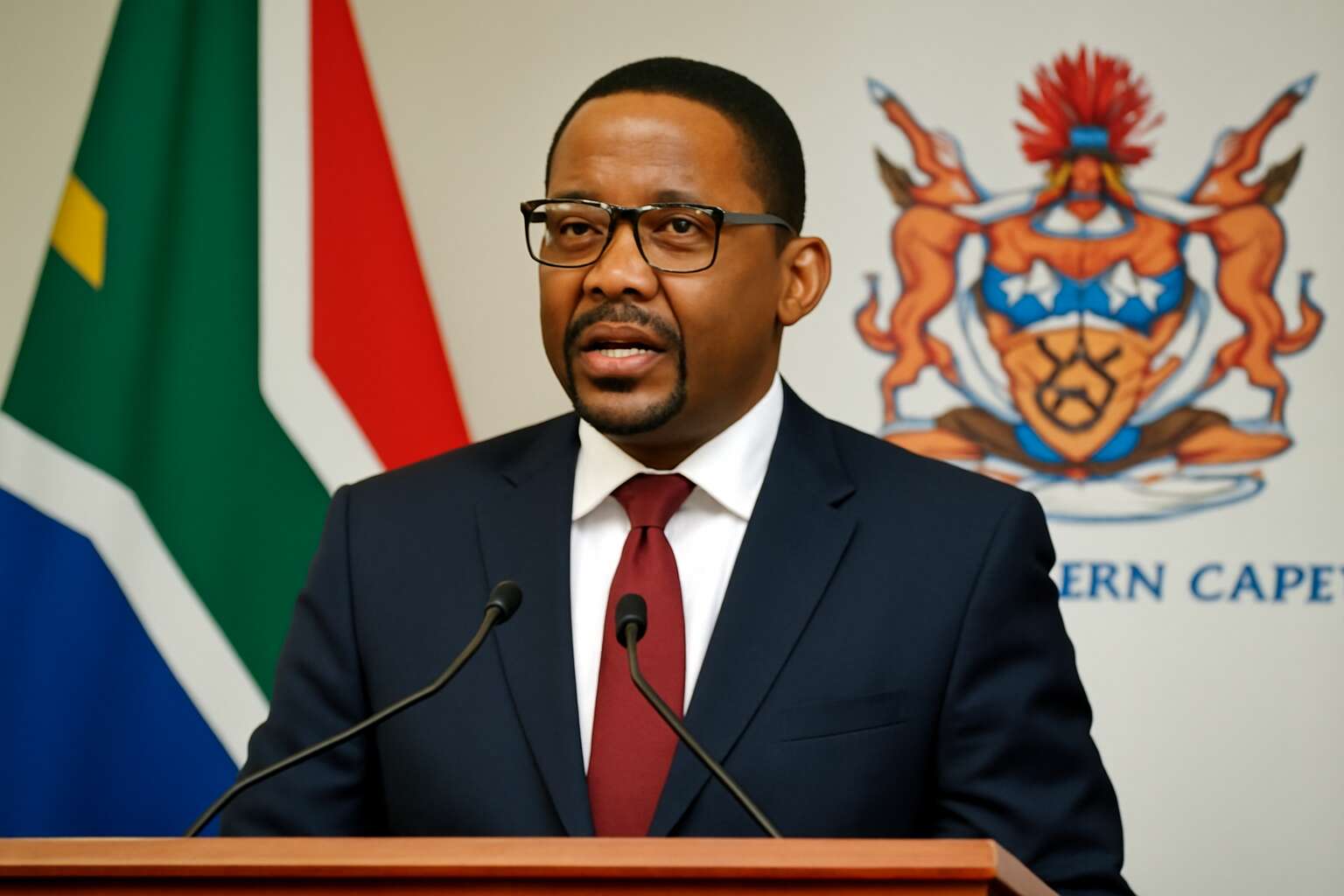
Understanding the Role of the Northern Cape Premier
Duties and Constitutional Powers of the Premier
Governing from the wind-swept plains to the sun-washed towns, the premier steers a provincial ship whose annual budget runs into billions of rand. The question many readers ask is who is northern cape premier, and what rhythm guides this role?
The role blends vision with administration and a touch of spellbinding practicality. The premier chairs the Executive Council, shapes policy priorities, and coordinates departments to deliver services, from schooling to road upkeep.
- Chairing the Executive Council and setting policy direction
- Overseeing the provincial civil service and administration
- Coordinating with national government and other provinces
- Guiding budget priorities and service delivery
Constitutional powers place the Premier at the helm of the province’s executive, empowering appointments to the cabinet, overseeing the budget, and signing provincial legislation into effect within the framework of law. The office also represents the Northern Cape in intergovernmental forums and public ceremonies.
Appointment Process and Term of Office
In the Northern Cape, the question rings through legislative halls: who is northern cape premier? The answer rests on a chosen path—an appointment shaped by the Provincial Legislature rather than a solitary star on the horizon. After elections, members vote to install the head of government, a leader who must sit in the legislature and command confidence across parties.
The term mirrors the five-year legislative cycle, a rhythm that carries policy across wind-swept plains and sun-washed towns. For readers asking who is northern cape premier, the answer lies in procedure, not biography.
Here are the key steps in the appointment process:
- The Premier is elected by the Northern Cape Provincial Legislature from among its members.
- The term aligns with the five-year cycle and ends with elections unless a replacement occurs.
- A Premier can be removed by a vote of no confidence or resignation, prompting a fresh appointment.
Key Relationships: Premier, MECs, and the Executive Council
In the Northern Cape, leadership is a living, breathing dialogue rather than a solitary headline. who is northern cape premier is answered not by biography alone, but by the relationships shaping governance—the way policy flows from the legislature to the communities it serves and back again. “Leadership is a chorus, not a solo,” a long-time community observer once told me, and I’ve seen that chorus rise in dusty town halls and wind-swept markets.
Understanding the role means looking at the key relationships: Premier, MECs, and the Executive Council. The Premier chairs the cabinet, aligning strategy with delivery; MECs head portfolios that turn policy into services; the Executive Council makes the big calls that touch daily life across towns and farms.
- Premier as chair and strategic forum
- MECs as portfolio leads
- Executive Council as the primary decision-making body
Together, they weave accountability into the fabric of provincial life, turning distant mandates into tangible improvements for people living along the plains and in the villages.
Responsibilities to the Provincial Legislature and Citizens
On the plains and in wind-swept towns of the Northern Cape, leadership is a conversation, not a crown. who is northern cape premier? The answer is found in the living link between the legislature and the communities it serves—a dynamic where policy travels from debate desks to schools and clinics and back again. ‘Leadership is a chorus, not a solo,’ a long-time community observer once recalled, and that chorus plays out in dusty town halls and bustling markets.
- The chair who guides the cabinet toward delivery outcomes
- Portfolio heads who turn policy into local services
- The central decision-making body that sets priorities and allocates resources
In essence, this role binds citizens to accountability through transparent reporting and steady, local-focused governance.
Historical Context of the Northern Cape Premier Office
Origins of the Position in South Africa’s Provincial System
Change arrived in a rush: provincial offices became the heartbeat of policy after 1994! Under the new constitutional order, provinces gained elected legislatures and executive powers. The Premier emerged as the head of the provincial executive, steering budgets, service delivery, and policy in the Northern Cape.
Origins of the position lie in the post-apartheid settlement that defined provinces as political entities within a unitary state. If you ask who is northern cape premier, the answer lies in the Premier’s duty to lead an Executive Council and answer to the Provincial Legislature.
Key milestones along the way include:
- Interim arrangements granted provincial autonomy
- Constitution codified provincial powers
- Premier’s office evolved with Executive Council
These threads shaped the office serving residents today.
Notable Premiers and Their Impacts
From the post-1994 settlement to today, the Northern Cape Premier’s Office has grown from a symbolic office into a policy workshop that links distant towns to national ambitions. The premise was simple: elect a provincial leadership that would translate constitutional promises into roads, clinics, and schools. “Delivery is the true measure of leadership,” a maxim whispered through the corridors as the office began to crystallize its mandate.
Notable Premiers and their Impacts shaped the office’s public memory across decades:
- Early post-apartheid leaders prioritized rural access to clinics and roads, weaving policy into everyday life.
- Mid-era administrations consolidated budgets for education, health, and water security, expanding service reach.
- Contemporary premiers championed economic diversification and climate resilience, aligning policy with regional strengths.
For readers seeking who is northern cape premier, the answer reveals a lineage of stewardship that informs current governance and community trust in service delivery.
Shifts in Policy Focus Over Time
Across the Northern Cape’s vast, sun-scorched expanse, more than 60% of residents live in towns under 10,000 people. The Premier’s Office has moved from ceremonial nod to policy workshop, threading distant settlements into national ambitions. That arc—from promise to pavement—reads like a frontier saga: policy trails are drawn, budgets extended, and everyday lifelines brought closer to every corner of the province.
Three arcs define this evolution:
- Data-driven planning that links distant communities to essential services.
- Water stewardship and resilient infrastructure forming the backbone of policy.
- Economic renewal rooted in regional strengths and sustainable energy.
For readers pondering who is northern cape premier, the answer lives in a lineage of stewardship that shapes governance and community trust. In the wind-sculpted landscape, policy becomes a map that returns to people, turning distant promises into tangible lifelines.
Role of the Premier in Economic Development
In the Northern Cape, where more than 60% of residents live in towns under 10,000, the Premier’s office functions as a practical compass for growth. Born from post-apartheid reform, the office now threads distant settlements into national ambitions.
So, who is northern cape premier? A steward who translates promise into pavement, shaping economic development with water stewardship and regional strength.
- Links long-term plans to essential services
- Expands renewables and regional value chains
- Strengthens local government partnerships
That orchestration is felt in every budget line and infrastructure decision.
Readers sense the rhythm: governance that prioritizes people over pomp, turning far horizons into daily lifelines.
Intergovernmental Relations and Collaboration with Municipalities
In the wake of 1994 reforms, the Northern Cape carved out a formal Intergovernmental Relations framework to bind distant towns to national aims. This history favors practical collaboration among municipalities, departments, and the Premier’s Office.
So, who is northern cape premier? A steward of cross-level collaboration, translating national blueprints into local street-level delivery.
- Formation of an Intergovernmental Relations unit in the post-apartheid era
- Structured joint planning with municipalities and provincial departments
- Capacity-building and coordinated disaster response across districts
That rhythm shows in budgets and service delivery, turning promises into daily lifelines.
How the Northern Cape Premier Influences Policy
Policy Areas under the Premier’s Jurisdiction
This is where policy wears the human face: the premier steering priorities across the province. who is northern cape premier, truly, is a question of presence as much as title, because the role translates ambition into coordinated action across ministries, budgets, and people.
Under the Premier’s jurisdiction, policy areas converge—economic development, social well-being, and sustainable governance—through a steady hand that aligns MEC agendas with citizen needs.
- Economic strategy and investment
- Health, education, and social protection alignment
- Environmental stewardship and climate resilience
This orchestration is not solitary; it travels through intergovernmental channels, provincial and municipal councils, and civil society voices, translating data into priorities and priorities into outcomes.
In this light, the Northern Cape’s policy posture becomes a living melody of resilience and opportunity.
Budget Oversight and Fiscal Policy at Provincial Level
In the Northern Cape’s policy theatre, the premier’s influence glides over budgets like a conductor’s baton, shaping tone and tempo. A steady voice once whispered, ‘Policy wears the human face,’ and the question ‘who is northern cape premier’ sits at the podium as presence rather than title—transforming promises into coordinated action across departments and communities.
Budget oversight and fiscal policy take shape through disciplined processes: strategic allocations, performance checks, and transparent reporting. The premier weaves MEC agendas with provincial priorities, guiding intergovernmental consultations and ensuring every rand furthers citizens’ well-being.
- Strategic budget alignment across departments
- Public accounts transparency and audit readiness
- Performance monitoring and outcome reporting
The result is a living melody of resilience, where numbers meet needs and policy becomes practice!
Strategic Planning and Long-Term Development Goals
In the northern reaches of governance, the premier acts as a compass for policy and long-range ambition. The phrase who is northern cape premier fades into a living practice: a coordinator who threads provincial priorities into a shared strategy. Picture a conductor guiding a chorus of departments—education, health, rural development—so that every policy action hums toward a sustainable future.
Policy planning becomes a stage where the premier negotiates between needs and resources, sculpting development goals with clarity and pace.
- Aligns strategic programs with measurable milestones
- Forges intergovernmental partnerships to unlock capital
- Monitors progress with transparent reporting
In this theatre, long-term development is not a distant melody but a living practice—resilience woven into budgets, service delivery, and community empowerment.
Crisis Management, Public Health, and Disaster Response
In moments of upheaval, the Northern Cape premier acts as a compass for action. For those wondering who is northern cape premier, the answer reveals a policy shepherd coordinating health, crisis management, and disaster response. The office translates sweeping strategy into timely moves, turning alarm into organized, steadier action.
During crises, the premier shapes policy through intergovernmental coordination, data-driven decisions, and rapid resource mobilization. Policy becomes a living framework—flexible enough to absorb shocks yet anchored in community trust.
- Aligns crisis protocols with provincial health data
- Mobilizes rapid funding and resource deployment
- Communicates clearly with communities to reduce panic
In public health and disaster response, the premier elevates resilience—supporting surge capacity, communication campaigns, and recovery planning that knit communities back together. That blend of foresight and hands-on governance makes the office more than a title; it is a living protocol for a province under pressure.
Current Dynamics and Public Perception of the Northern Cape Premier
Current Officeholder and Background
The Premier’s office is where policy becomes day-to-day life—roads improve, water projects start, schools gain new capacity! In the Northern Cape, visible progress often follows a calm, steady hand at the helm.
For those asking who is northern cape premier, the current officeholder comes from a background in local governance and public service, known for steady stewardship and a focus on development that reaches both towns and rural communities.
- Accessible, accountable governance that listens to communities
- Transparent policy updates and clear timelines
- Swift, competent crisis response and recovery planning
Behind the office’s outward activity lies ongoing work—funding, timelines, and service delivery—handled with steady pragmatism.
Public Engagement and Communication Strategies
‘We want the plan, not the press release,’ says many residents in the Northern Cape. In a region where updates travel faster than roadwork, the question ‘who is northern cape premier’ matters less as a title and more as a signal of how governance speaks to people. Clarity, not rhetoric, shapes daily life here!
Public engagement relies on accessible channels and plain-language updates.
Here are the channels shaping public perception:
- Town-hall meetings in district centers
- Weekly digital briefings and SMS updates
- Transparent dashboards on service delivery
- Multilingual communication with rural communities
These strategies shape public perception by turning talk into tangible outcomes—on water access, schooling, and local streets. The Premier’s office earns legitimacy when it listens, explains decisions in plain language, and follows through on commitments, especially during crises.
Media Coverage and Accountability Mechanisms
Public life in the Northern Cape moves fast enough to outrun a road crew, and residents are laser-focused on action, not rhetoric. For readers asking who is northern cape premier, the answer reads like a badge of accountability rather than a coronation. A regional pulse check finds that 63% want plain-language updates within 24 hours of a policy shift, not a diary entry.
Public perception relies on accessible channels that translate talk into tangible change.
- Town-hall meetings in district centers
- Weekly digital briefings and SMS updates
- Transparent dashboards on service delivery
- Multilingual communication with rural communities
Media coverage and accountability mechanisms keep the conversation honest. The Premier earns legitimacy when it listens, explains decisions in plain language, and follows through on commitments, especially during crises.
Contemporary Challenges Facing the Province
In a province where public life moves as fast as a sun-baked highway, the question who is northern cape premier is less a title than a measure of leadership in action. Pulse checks show 63% want plain-language updates within 24 hours of policy shifts. Public life relies on channels that translate talk into tangible change.
Current dynamics tilt toward practical results over rhetoric. Residents expect clarity and accountability as crises unfold, and the Premier is judged by the ability to explain decisions in plain language.
- Energy reliability and grid upgrades
- Water security and drought response
- Local economic diversification and job creation
Contemporary challenges facing the province include climate variability and drought, persistent rural-urban service gaps, and fiscal constraints that strain budgets and municipal capacity.
Public perception hinges on listening and follow-through. When leadership communicates transparently and shows measurable outcomes, trust grows, especially during emergencies and recovery efforts.
Election Cycles and Political Momentum
In a province where public life moves on heat-warped highways, leadership itself becomes a measure of action. A fresh pulse shows voters crave plain language and steady accountability as election cycles quicken and momentum coalesces around tangible results. This is not merely a title; it is a living gauge of resilience amid drought, energy strain, and local renewal.
Current dynamics favor clear explanations and measurable progress. The public watches for improvements in energy reliability, water security, and job creation, and the question who is northern cape premier remains a living inquiry answered through transparent deeds rather than polished CVs!
- Policy clarity during crises
- Visible service-delivery improvements
- Coherent regional economic plans
Momentum grows when voices are heard and outcomes are visible.
Comparisons with Premiers from Other Provinces
Last year’s pulse survey showed that roughly two-thirds of residents want leadership that speaks plainly and keeps promises. That question—who is northern cape premier—has become a living barometer of trust as drought tightens its grip and infrastructure strains test patience. Voters crave accountability, steady updates, and tangible results, not polished epics on a podium.
Current dynamics favor clear explanations and measurable progress. The public watches for improvements in energy reliability, water security, and job creation, and leadership is judged by outcomes rather than glossy bios. Compared with premiers from other provinces, the Northern Cape’s test is simple: credibility thickens when service is timely and plans stay transparent.
- Crises-era policy clarity
- Visible improvements in community service delivery
- Aligned, coherent regional economic planning
Public sentiment shifts with what unfolds on the ground—seasonal rains, grid resilience, and local renewal shaping the evolving answer to the province’s leadership question.



0 Comments