
Why Kimberley Is the Capital of Northern Cape
Historical Roots of the Diamond City
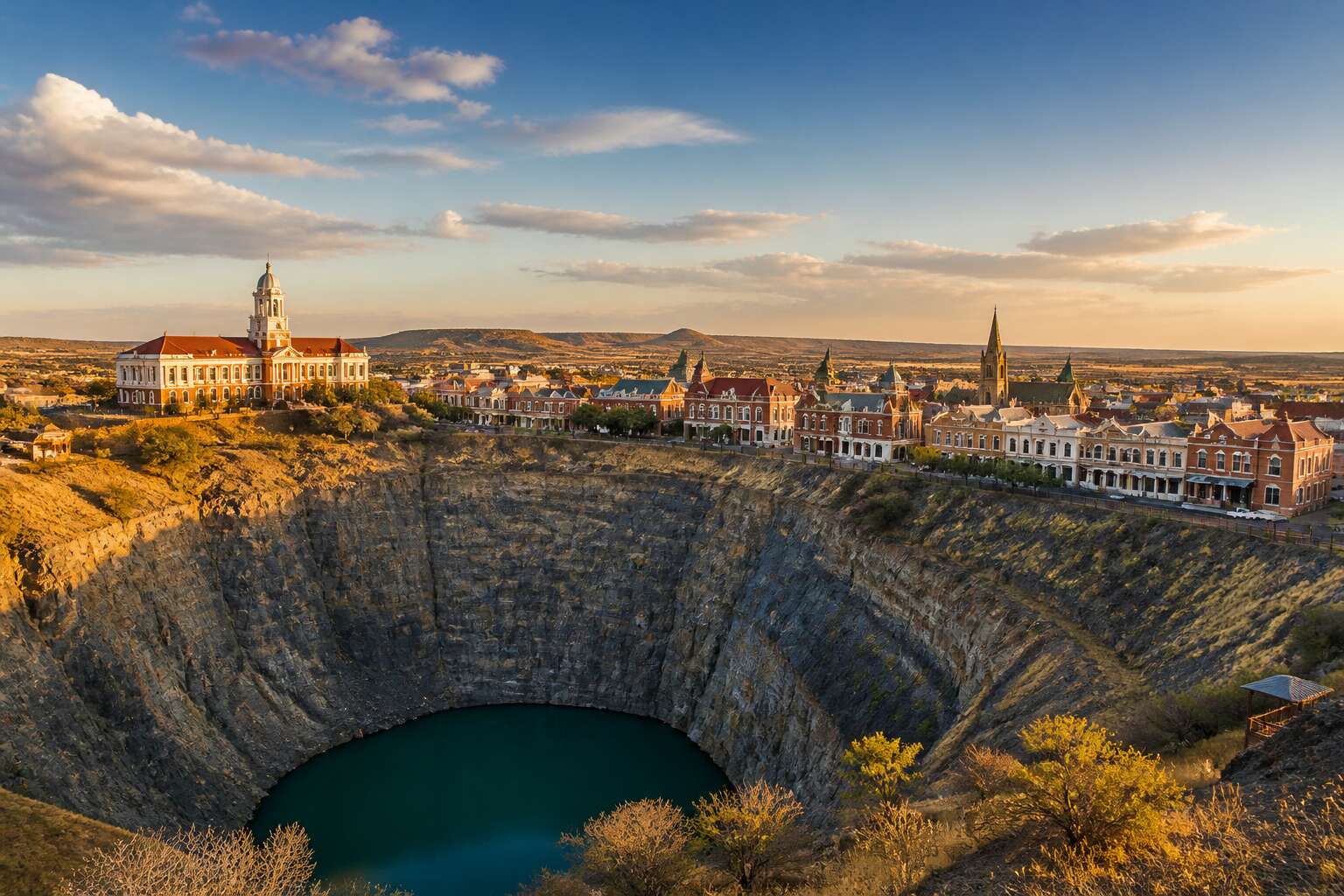
When the Eureka Diamond turned up in 1867, the Northern Cape changed. That stone caused a rush, and by 1871 thousands of seekers were scraping the earth near Kimberley. The settlement grew quickly, and the excavation known as the Big Hole became its most notable feature. This growth made Kimberley the economic centre of the region, a status that later made it the capital for northern cape!
The city’s administration grew with its mining industry. Municipal status arrived in 1878, and the railway in 1885 improved transport. When South Africa’s provinces were drawn in 1994, Kimberley already had the institutions and workforce needed to govern. Its history as a diamond centre provided wealth and solid infrastructure, which secured its position as the capital for northern cape. That history is why the province’s government sits here today, a direct result of the diamond find.
Geographic Importance Within the Province
When I look at a map of the Northern Cape, I see a province defined by distance. It spans over 370,000 square kilometres, yet holds the country’s smallest population. In this expanse, Kimberley sits at the eastern edge. Its location is not accidental.
The city lies at the junction of major road and rail corridors, connecting the province to Gauteng and the Western Cape. This placement makes it the logistical centre of the region. For a government to function, it must be reachable. Kimberley is reachable. Within the province, it serves as the primary gateway for trade and administration. The city’s position along the N8 and N12 routes ensures that officials, goods, and services can move with relative ease. That accessibility, more than any other factor, is why it holds the title of capital for northern cape. This geographic centrality is the practical reason behind the province’s administrative seat.
Administrative and Political Role
Try to remove Kimberley from the administrative equation, and the provincial machinery would stall. The capital for northern cape is not a ceremonial designation; it is a functional one. Here, the provincial legislature convenes to pass laws that govern a territory larger than many countries. The executive council sits in this city, making budgetary and policy decisions that carry real weight for communities from Upington to De Aar.
Every provincial department heads its operations from Kimberley. This concentration of governance creates a feedback loop. When a resident of Kuruman lodges an appeal, that paperwork lands here. When a contractor seeks a tender for a road project, the approval process unfolds here.
- Premier’s office coordinates across five districts.
- Provincial treasury allocates municipal grants.
- Ombudsman reviews public complaints.
The city’s political gravity is reinforced by the lack of comparable alternatives. No other town in the province hosts the high court, the legislature, and the head of government simultaneously. That triple presence makes Kimberley the undisputed capital for northern cape, a status rooted in administrative necessity rather than sentiment.
Top Attractions and Landmarks in the Capital
The Big Hole and Its Legacy
The Big Hole cuts into the edge of Kimberley, a hand-dug void 215 metres deep that draws travellers to this capital for northern cape. Its scale is vertiginous. Thousands of miners carved it out with picks and shovels, chasing diamond-bearing earth. Standing at the rim, I felt the scale of their effort settle over the site.
The legacy continues beyond the pit. Visitors descend into recreated mine tunnels, walk the cobbled streets of the reconstruction, and study the headgear that once hauled ore to the surface. The hole yielded three tons of diamonds before operations ceased, leaving behind a flooded blue basin.
What lingers here:
- The impossible stillness of the water below.
- The sun-weathered timbers of the old shaft.
- The rows of sepia miners’ portraits in the museum.
For anyone visiting the capital for northern cape, the Big Hole remains the raw, silent centre of Kimberley’s story.
Kimberley Mine Museum
The Kimberley Mine Museum preserves more than just the pit. It is a detailed recreation of late 19th century life. Visitors can explore period buildings, underground tunnels, and vintage vehicles.
For anyone charting a course through the capital for northern cape, this attraction anchors the city’s story. The displays are arranged around a central courtyard, giving context to the diamond rush that shaped the region. A viewing platform overlooks the open mine, and that view alone justifies the visit. However, the interior exhibits demand equal attention. A few highlights stand out:
- Recreated mine tunnels with original equipment
- An authentic 19th century pub interior
- The headgear that lifted ore from the depths
Each element reinforces the engineering and human effort behind the city. For travellers to the capital for northern cape, it offers a thorough counterpoint to the raw spectacle of the Big Hole.
William Humphreys Art Gallery
The William Humphreys Art Gallery holds one of South Africa’s most respected art collections. For anyone visiting the capital for northern cape, this gallery offers a quiet counterpoint to the city’s industrial heritage. The permanent collection spans Dutch and Flemish masters, British portraits, and significant works by South African artists.
I found the decorative art section particularly compelling. The bequests that built this collection came from mining magnates who wanted cultural depth in the region. Visitors can trace the evolution of local art movements through dedicated exhibition spaces.
- Works by Pierneef and other South African modernists
- 18th century furniture and silverware
- Rotating temporary exhibitions from contemporary artists
The gallery’s setting in the capital for northern cape makes it an accessible stop for travellers. Admission is affordable, and the galleries remain uncrowded on weekdays.
Honoured Dead Memorial
The Honoured Dead Memorial in the capital for northern cape is a stern sandstone obelisk that commemorates a siege most visitors have never heard of. It marks the 124-day Siege of Kimberley, a conflict where colonial forces defended their diamond claims against Boer artillery. I walked past it twice before noticing the gun, because the memorial itself is strangely quiet.
The Long Cecil, a locally made gun on a nearby pedestal, gives the site its only hint of violence. The memorial lists the names of 27 defenders, carved into the rock. For a quick stop, take note of the following items:
- The 9.4-metre obelisk and its bronze plaques
- The Long Cecil gun on its pedestal
- The view of the city from the memorial steps
Visitors to the capital for northern cape who appreciate military history will find this a worthwhile ten minute detour. The site offers no dramatic narrative, just stone and names, which is enough.
McGregor Museum
The McGregor Museum makes a case for slower looking. It occupies an old hotel, a grand Edwardian relic with verandas that catch the afternoon light. Inside, the galleries shift between eras, from San engravings to the preserved study of a colonial naturalist.
I was struck by the quiet rhythm of the rooms. One holds pressed flowers, another a geological display of the earth beneath the capital for northern cape. The collection is dense, and the museum does little to organise it into a single story.
- The Khoisan collection, with its delicate arrowheads and ostrich shell beads
- The restored library, where the wood still smells of wax
- The garden, planted with drought-resistant species
For a visitor tracing the capital for northern cape, the museum offers a place to pause and consider how the city stores its past.
Living and Working in the Capital
Real Estate Trends and Cost of Living
The capital for northern cape offers a balance of affordability and steady demand. Property prices have remained stable over five years, with entry level homes starting around R750,000. Central business district homes attract young professionals, while suburbs appeal to families seeking larger plots!
Cost of living sits roughly 20% below the national average. Groceries, utilities, and transport cost less. Residual income often flows into home improvements, explaining the growing rental market.
Working locally spans mining, retail, and government services. Many residents run remote operations due to improving fibre connectivity. Typical monthly expenses:
- Rent for a two bedroom flat: R5,500
- Mid range restaurant meal: R180
- Monthly electricity and water: R1,200
This financial leeway, combined with a slower pace, makes the capital for northern cape a practical choice.
Education and Schooling Options
Kimberley’s schooling options suit families who value stability. Public schools maintain moderate class sizes, while private colleges offer alternative curricula. I have seen strong technical programmes that connect directly to local mining and engineering careers. Early childhood centres are widespread, although eastern suburb places remain scarce.
Working parents find that school timetables align well with shifts in retail and government services. The capital for northern cape hosts a university campus, so matriculants often study without leaving home. Tertiary options include diplomas in education and business.
- Dual medium primary schools
- Cambridge and IEB high schools
- Vocational and adult learning centres
This variety reinforces the practical appeal of living here.
Healthcare Services and Facilities
When I first arrived in the capital for northern cape, I wondered if specialist care would require a long drive. The reality surprised me. Two private hospitals and a network of public clinics cover the city and its surrounding districts, with emergency units positioned within fifteen minutes of most suburbs.
Referrals to specialists rarely involve weeks of waiting. Common services include:
- 24 hour trauma and emergency rooms
- Maternity and paediatric wards
- Chronic disease management for diabetes and hypertension
- Radiology, oncology, and physiotherapy units
What impresses me most is the occupational health link with local mines. Doctors work directly with employers, so workplace injuries move quickly from shift to treatment. For everyday needs, pharmacy queues are short, and district nurses visit homes in outlying areas. The system lacks the vast choice of coastal cities, but it delivers dependable care without the frantic pace.
Transportation Networks and Accessibility
Ask any resident about the capital for northern cape and they will mention the road. The N12 and N8 intersect here, linking the city to Johannesburg, Cape Town, and Namibia with ease. The airport offers daily flights to Johannesburg, saving business travellers from early mornings on the highway.
Public transport consists of minibus taxis and a limited bus service. Most middle class workers drive. Parking is plentiful, and the traffic lights obey a polite rhythm. For rail, the Shosholoza Meyl connects the city on a timetable best described as flexible.
The key routes to remember:
- N12 east to Johannesburg, about five hours.
- N8 east to Bloemfontein, two hours.
- R31 south to the Western Cape.
Local roadworks appear regularly, but detours are clearly marked. Overall, the transport network in this city supports daily life without the exasperation of larger metros.
Safety and Community Life
Living in the capital for northern cape means measuring safety in street-level familiarity, not crime statistics. Residents in Belgravia and Kenilworth greet each other by name. Neighbourhood watches operate with quiet efficiency. The police station on Du Toitspan Road responds quickly, but most residents rely on community vigilance first.
Local churches, schools and sports clubs structure social life. They organise clean-ups and block parties. My neighbour, a retired miner, runs a vegetable garden that feeds three families. That interdependence defines the city.
Work life follows a predictable tempo. Government offices dominate the formal economy, but small engineering firms and tradespeople find steady work. Most professionals live within walking distance of their offices. The capital for northern cape offers a scale where career and community overlap.
Community organisations address common issues:
- street lighting upgrades
- youth holiday programmes
- recycling projects at primary schools
- safe house networks for abused women
These efforts are unglamorous. They work because people show up.
Business and Investment Opportunities
Key Industries Driving the Local Economy
Kimberley remains the capital for northern cape, yet its economic pulse now beats through more than diamond pipes. Mining still anchors the province, with manganese and iron ore operations near Kathu and Hotazel generating billions in export revenue. That activity pulls in logistics firms, engineering contractors, and equipment suppliers who base themselves here for regional access.
Agriculture offers a quieter but steady stream. The Orange River supports vineyards, date palms, and pecan orchards, while livestock farming dominates the vast Karoo plains. These sectors create seasonal work and processing opportunities that diversify the local job market beyond the pits.
Renewable energy is the newest driver. The Northern Cape hosts some of the continent’s largest solar plants, drawing private capital and international developers. Investment opportunities cluster around:
- Component maintenance and supply chains for solar farms
- Expansion of cold storage for fruit exports
- Tourism linked to heritage and adventure routes
Each industry feeds the others, and the capital benefits from its position as the administrative gateway.
Tourism as a Growth Sector
Tourism contributes under five percent to the province’s GDP, yet its growth outpaces mining. The capital for northern cape, Kimberley, plays a central role in this shift, though the real expansion happens beyond city limits. Visitors seek the Kalahari’s rust tones, the Augrabies Falls, and the Richtersveld’s lunar plains. These destinations remain underdeveloped, which appeals to investors seeking early entry. Opportunities cluster in specific niches:
- Guided astro-tourism in the Karoo, where night skies are a certified preserve
- Adventure routes linking Sutherland’s observatories to wilderness camps
- Cultural tours featuring San rock art and living Bushman communities
Each experience requires local accommodation, logistics, and trained guides. That demand creates business for operators based in the capital. With air links improving and the N1 corridor expanding, tourism’s contribution could double within a decade. Kimberley’s administrative strength now markets an authentic frontier, not a historical relic.
Infrastructure and Development Projects
Certainty attracts capital. That is the guiding logic for infrastructure spend in the Northern Cape. The province holds a renewable energy pipeline exceeding 50 gigawatts, most of it tied to solar radiation and open grid capacity in the arid interior.
The capital for northern cape anchors the regulatory space where investment decisions get signed. Actual development projects, however, spread across the province. Planned infrastructure includes 132 kV transmission line expansions near Upington and a new desalination plant on the Atlantic coast. These programmes alter the risk profile for private investors.
- Battery storage and grid stabilisation projects
- Green hydrogen synthesis plants in the Tsau KaiB region
- Modular water treatment units for mining operations
The capital for northern cape supplies the legal, financial, and project management services that underpin these ventures. That gives Kimberley a quiet but central position in the investment chain. Land prices sit at a fraction of the national average, and early entry still secures meaningful concessions.
Government Services and Administrative Jobs
Roughly one in five working residents in Kimberley is employed by a government agency. That concentration creates a steady demand for business support services. Companies handling payroll, audit, legal compliance, and facilities management have found reliable clients here. The capital for northern cape anchors this ecosystem, as provincial departments and parastatals sign contracts and lease office space within the city limits.
Administrative jobs in Kimberley range from clerical roles to senior policy analysis. The provincial treasury, department of economic development, and Office of the Premier all maintain substantial footprints. For investors, the pattern is simple. Public budgets bring stability, and private enterprise benefits from predictable procurement cycles.
- Immigration and licensing services
- Legal and conveyancing firms servicing state land
- IT and data management for municipal records
The capital for northern cape offers lower entry costs than Gauteng or the coast. A new business can lease office space near the civic centre at a fraction of Johannesburg rates. That advantage matters when bidding for government tenders!
Entrepreneurial Support and Incentives
Kimberley’s entrepreneurs have a peculiar advantage. The capital for northern cape comes with unglamorous but useful incentives. A colleague in logistics called it ‘free money with paperwork.’ That is an exaggeration, but only mild. Municipal rate rebates apply for two years. The small enterprise development agency offers mentorship, not just loans. Here is a sample of what you can claim:
- VAT registration assistance
- Export market entry grants
- Skills development levies reimbursement
Rents remain modest, stretching seed funding. I have seen a woodworking firm launch by pooling incentives and a persistent accountant. That is an environment where tenacity beats networking.
Cultural and Social Scene
Annual Festivals and Local Events
For a city built on the fortunes of a diamond pipe, the social calendar pulses with a mix of industrial heritage and community pride. The capital for northern cape hosts an array of annual gatherings that turn the usual quiet of the Kalahari into something louder. I have been to the Kimberley African Diamond Festival, which celebrates the grit of the region with live music and local brews. Local events like the Galeshewe Day parade honour the township’s history, while the Diamond Dash Oktoberfest shows a lighter side of city life. Consider a few staples:
- The Gariep Arts Festival, held every September, brings theatre and dance to outdoor stages.
- The Northern Cape Agricultural Show, a showcase of livestock and farming skill, draws families from every district.
These occasions are not merely entertainment. They bind together the miners, farmers, and artists who otherwise work at opposite ends of this vast province.
Culinary Highlights and Dining Spots
Some of the best conversations in Kimberley happen over a plate of skilpadjies and a cold beer. The capital for northern cape holds a culinary scene that is quiet on the surface yet rich underneath, much like the province itself. You will find shebeens in Galeshewe serving hearty lamb stews, while the city centre’s bistros plate up Karoo lamb with local rooibos sauces. Family-run tea gardens in Belgravia still bake malva pudding from old recipes. A few dining spots stand out:
- Star of the West, the city’s oldest pub, offering game pies and a century of stories
- The Kimberley Club, with its traditional high tea and Cape Dutch architecture
- Die Voorhuis, a farmhouse-style eatery known for slow-cooked oxtail
Here in the capital for northern cape, food is community. Miners, teachers, and artists share tables across these venues, trading gossip and history. The flavours stay honest and straightforward, matching the landscape.
Nightlife and Entertainment Venues
When the sun drops behind the mine dumps, the capital for northern cape grows busier. The city centre clubs spin Afro house and kwaito, while township clubs in Galeshewe host live jazz until the early hours. In the Oppenheimer Gardens, families picnic as the local theatre group rehearses lines nearby. The crowd mixes civil servants, mine workers, and Sol Plaatje University students who follow the music from one venue to the next.
The dependable choices are simple:
- The cinema at Diamond Pavilion for late night screenings
- The community halls hosting maskandi and gospel choirs on weekends
- The sports bars along Du Toitspan Road for live rugby screenings
- The open mic nights at smaller venues near the city centre
Loud, messy, and welcoming. That is the social scene in this corner of the capital for northern cape!
Sports and Outdoor Recreation Activities
The weekend routine of the capital for northern cape unfolds outside official buildings, on green spaces and in meeting halls. Community halls in the CBD host craft markets and poetry slams, while the Flamingo Vlei boardwalk attracts birdwatchers and trail runners. The Union Grounds fill with amateur rugby and cricket, and the Magersfontein route draws cyclists for its steady climbs.
- Picnicking at the Kamfersdam flamingo sanctuary
- Joining the Sunday parkrun at Oppenheimer Park
- Kayaking on the Vaal River near Douglas
Community life here depends on these gatherings. Chess clubs argue over moves in local libraries, and the Sol Plaatje municipal pool trains youth swimmers every morning. This capital for northern cape offers recreation that belongs to its residents, not to tourist brochures.

0 Comments