
A Glimpse into the Town’s Past
The Founding Story of a Karoo Settlement
In 1855, a small group of settlers etched a town from the Karoo’s hard soil, driven by a conviction that isolation held promise. They bought the land for a pittance and laid out a strict grid of streets that still anchors the town today. This was a deliberate act of defiance against the surrounding emptiness, and I find that audacity strangely moving.
Survival demanded immediate order. The founders secured water from the Hantam mountains and constructed a stark, dignified church. Their early priorities dictated the town’s layout:
- A deep, reliable well system.
- A central church square for gathering.
- Houses aligned to face the morning sun.
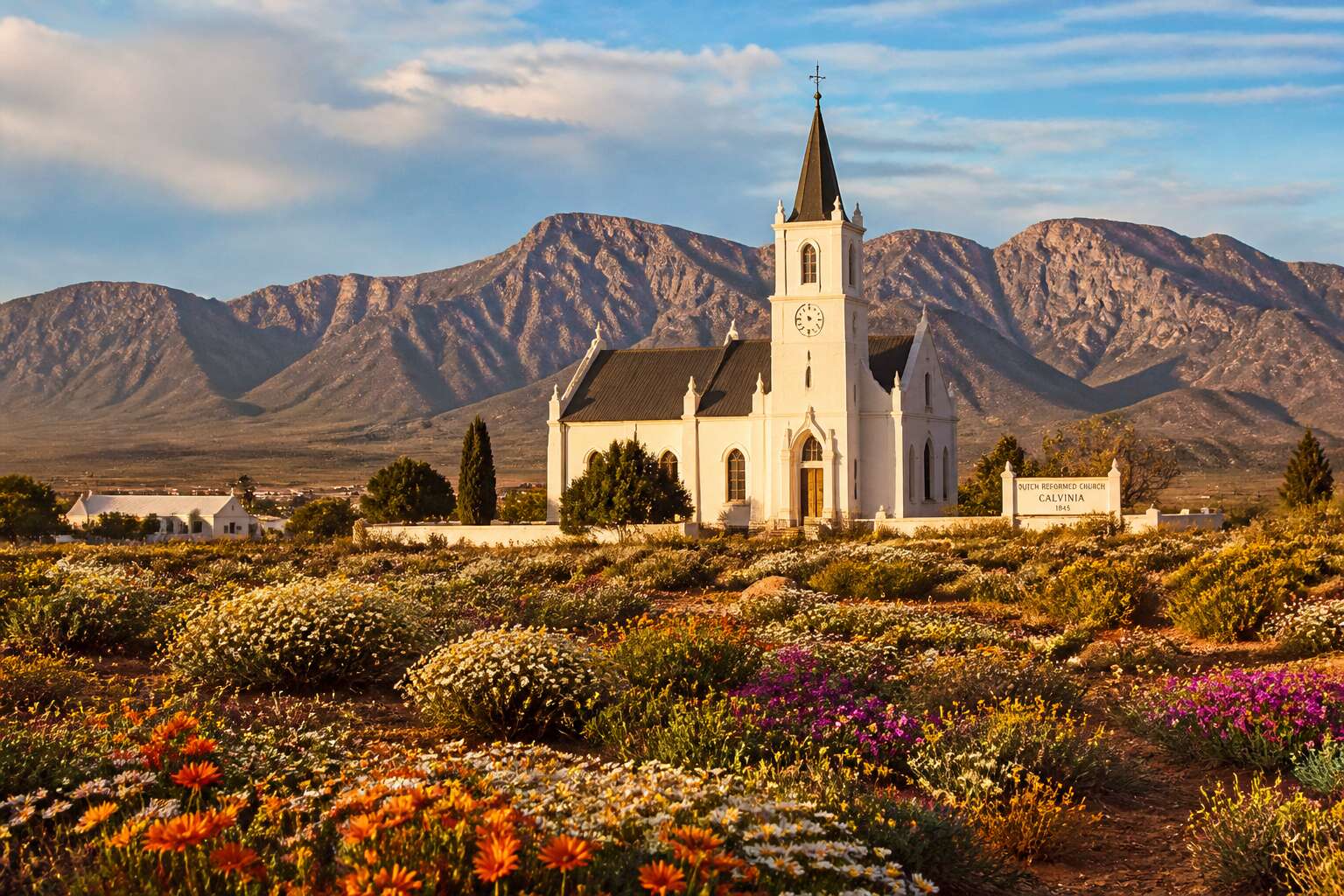
That structure remains a quiet fixture of calvinia northern cape today. Every corner reflects the stubborn planning of those first families, and the silence between the buildings feels like a resident entity, watching over the grid.
Architectural Treasures from the Victorian Era
The Victorian era shaped the streets of calvinia northern cape with unmistakable clarity. Hantam House, a National Monument built in the 1860s, stands as the finest surviving example of the period’s generous proportions and intricate detailing. I stepped into its shaded stoep and appreciated the careful preservation of its original features.
Its double-volume reception rooms, yellowwood ceilings, and the original bellows in the kitchen still function as they did more than a century ago. A short walk away, the Old Jail presents a sterner Victorian expression with its thick stone walls and iron gratings.
- The Parsonage, sporting a gabled facade and sash windows
- The Magistrate’s residence, framed by mature oaks
- The Rhenish Mission House, quietly ornate behind its boundary wall
These structures remain lived in and cared for, not frozen relics. They carry the practical elegance of an era that balanced simplicity with pride. For any visitor tracing the layers of calvinia northern cape, these facades reveal the measured ambitions of their Victorian builders.
The Role of the Dutch Reformed Church in Community Life
The Dutch Reformed Church has anchored calvinia northern cape since 1847, its spire visible from every approach. Sunday services draw a faithful congregation, but the church’s influence reaches into daily life. When drought gripped the Karoo, the church coordinated relief efforts and opened its halls to stock sales and community meetings.
The church also preserved records that trace the town’s past. Its baptism and marriage registers date back generations, offering families a tangible link to their ancestors. The congregation maintains this archive with care.
- Hosting weekly soup kitchens
- Supporting a local school’s reading program
- Organizing elderly visitation groups
These services keep calvinia northern cape cohesive, blending tradition with practical care. What a striking example of faith in action!
A Journey Through the Local Museum
Inside the Calvinia Museum, a 250 million year old amphibian skull rests under glass. That fossil is one of many unearthed across the Hantam region. Walking through the halls, I found a recreated general dealer shop from the 1920s, with original tins, scales, and a brass till. Every artifact arrived from families who still live here.
- A hand carved wild fig tree wagon
- A complete ox wagon harness
- Letters from Anglo Boer War soldiers
- A century old wedding dress
Each piece shows how people survived drought and isolation. The museum also hosts school visits, letting children handle a real fossil fragment. That moment of discovery stays with you! For anyone exploring calvinia northern cape, this museum offers a tangible connection to the town’s layered past.
Geography, Climate, and Natural Beauty
The Dramatic Hantam Mountains and Surrounding Plains
Calvinia northern cape sits in a landscape that refuses to be subtle. The Hantam Mountains rise abruptly from the vast plains, their ridges shifting from pale gold to deep red through the day. Ancient and worn, they still look imposing against the flat horizons.
The climate in calvinia northern cape is equally emphatic. Winters bring crisp mornings and occasional snow on the peaks, while summers turn the plains into a shimmering haze. Rainfall is sparse, mostly in winter, and the veld responds with a burst of wildflowers!
The natural beauty is a working landscape, shaped by sheep farming and hardy Karoo flora. The Hantam Mountains hide kloofs and streams that appear only after cloudbursts. Look out for:
- The Roggeveld escarpment’s panoramic views.
- Quartz patches glinting amid shale, hosting rare plant life.
- Seasonal daisy blooms carpeting the plains in spring.
The land keeps its own counsel, and that is the appeal.
Understanding the Arid Karoo Weather Patterns
In calvinia northern cape, rain is a discipline. The arid Karoo weather patterns follow a rhythm that locals read like a clock. Geography enforces this. The escarpment to the east blocks most moisture, leaving the plains dry for months.
Natural beauty here is a survival tactic. Plants grow low, with thick leaves and long roots. Quartz fields scatter light, but they also trap dew. The weather is predictable in its extremes:
- Cold fronts bring meagre winter rain.
- Summer heatwaves bake the clay pans.
- Sudden thunderstorms carve the kloofs.
These patterns shape farm schedules and flower cycles. Understanding them makes sense of the harshest beauty in calvinia northern cape.
Springtime Splendor: The Annual Wildflower Display
August brings a secret. In calvinia northern cape, the earth splits open with petals. The geography does the work: ancient seabeds, now shale, store winter’s sparse rain in their cracked layers. Dolerite ridges block the wind, creating microclimates where seeds wait for a precise trigger.
- Daisies cover the Bokkeveld Plateau
- Vygies turn rocky slopes orange and pink
- Sparaxis and lachenalia appear only after specific cold snaps
Climate delivers that trigger. A dry winter followed by a warm spell cracks the seed coats. Within days, the wildflower display fills the plains with colour. This bloom is not decoration. It is a survival event, timed to the hour.
Dark Sky Reserves and Prime Stargazing Opportunities
The sky above calvinia northern cape is a measurable asset, not a poetic flourish. High altitude and a flat horizon produce darkness that is almost absolute. The arid climate yields over 80% clear nights annually, and dry air keeps atmospheric turbulence low. I have seen stars here that are exceptionally sharp.
Geography helps. Dolerite outcrops block stray light from distant farmhouses, creating isolated zones of true darkness. This is why the region earns its place as a recognised dark sky reserve. The natural beauty is not a single vista. It is a density of photons.
A quick checklist of what you will see:
– The Magellanic Clouds, dwarf galaxies orbiting our own.
– Zodiacal light, a cone of interplanetary dust.
– The Milky Way, bright enough to cast a shadow on the plains.
For residents of calvinia northern cape, the night sky is the local landmark. Constant, silent, and spectacular.
Unique Desert Flora and Fauna
Calvinia northern cape receives barely 200mm of rain each year, yet the surrounding Hantam Karoo supports more than 1,200 plant species. That paradox explains the geography. Shale plains and low dolerite ridges hold moisture in scattered pockets, and each slope alters what can survive on it.
The dryness favours desert flora and fauna that need little. Quiver trees, Aloe dichotoma, stand exposed on rocky ground. Their copper-toned bark peels in thin sheets, and the branches end in tufts of fleshy leaves. Small succulents fill the spaces between stones, storing water in translucent leaves.
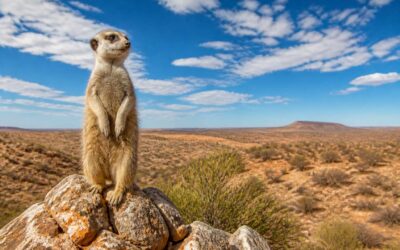
- Bat-eared foxes dig their dens beside old termite mounds.
- Ostriches move through the open veld in small groups.
- Karoo lizards bask on flat rock slabs at noon.
None of these species are accidental here. They belong to calvinia northern cape, shaped over many generations by thin rainfall and wide temperature swings.
Economic Pillars and Agricultural Heritage
Sheep Farming and the Wool Industry
In the vast quietude of the Karoo, sheep farming persists as a grim pact with the land. Merino flocks outnumber the people here by a wide count. For decades, wool from these dry pastures has been clipped, pressed, and railed to Port Elizabeth. The wind carries the sharp scent of lanolin and crushed thornbush.
Inside the shearing sheds of calvinia northern cape, work unfolds in a rhythm of hum and blade. Fleece tumbles onto concrete floors, weighed, graded, and bundled. The trade is efficient and unromantic.
- Merino wool accounts for nearly 90% of local output.
- Annual wool auctions draw buyers from Europe and East Asia.
Drought dictates every season. Farmers watch rainfall patterns with quiet dread. A single good year refills the coffers, while a poor one tests their courage. That cycle is the real heritage here, stitched into every bale.
Crops and Livestock: The Backbone of Local Trade
Beyond the wool bales, calvinia northern cape quietly depends on a broader agricultural base. Rooibos tea, lucerne, and maize fill the irrigated patches near the Hantam River. Livestock operations mix Dorper sheep, Boer goats, and Nguni cattle, supplying meat and hides to regional markets. I have watched the auction yard’s morning rush, where hundreds of animals change hands before noon.
The town functions as a trade hub for surrounding farms. A single seasonal harvest can shift the local economy. These are the pillars of daily commerce:
- Lucerne for fodder and export
- Rooibos tea for national buyers
- Karoo meat for premium butcheries
Each product follows the same rainfall gamble, yet the resilience shows in packed trucks and full silos. Agriculture remains the true backbone of calvinia northern cape, feeding both distant cities and the local market.
Artisan Food Producers and Karoo Specialties
The first bite of Karoo droëwors in calvinia northern cape tastes like the red dust itself. I found the artisan food producers clustered near the old railway sidings, where they dry sausage in the dry wind. These makers form an economic pillar that runs parallel to the commercial farms.
Their methods come from the agricultural heritage of the region. Rooibos tea leaves get crushed into spice rubs. Wild olives become briny preserves. A cooperage on the edge of town still barrels pickled veld greens for the national market. Every product sends a piece of the Hantam plains across South Africa.
- Sun-dried biltong with coriander
- Rooibos balsamic glaze
- Salted Karoo lamb ribs
- Sour fig jam
The turnover is modest but steady. Tourists and passing truckers carry these goods away, and the small workshops keep their traditions alive without fanfare.
Small-Town Entrepreneurship and Business Growth
The Thursday livestock auction at Vleissentraal in Calvinia Northern Cape moves thousands of animals through its pens. Farmers from across the Hantam district watch the gavel fall and read the season’s value in live prices. The auctioneer’s voice crackles over speakers. Efficient, fast, and central to the economy.
That sale ring forms one of the key economic pillars of Calvinia Northern Cape. Around it, supporting businesses include:
- Agricultural equipment and irrigation supply
- Meat processing and refrigerated transport
- Guest house and farm stay bookings
- Public services like the hospital and schools
Entrepreneurs are moving past the pastoral base. A hardware store from the 1950s now sells solar water pumps alongside fencing wire. A converted bank building hosts a remote marketing agency with Cape Town clients. The cooperative’s old silos now store rooibos for young farmers. None of that happened by accident!
Agricultural heritage forms the base. Each generation builds on it.
Challenges and Resilience in a Semi-Desert Economy
Annual rainfall around calvinia northern cape hovers near 200 millimetres. That number shapes every economic decision. Farmers plan stocking rates around years of scarcity, not years of plenty.
The economic pillars of calvinia northern cape rest on a narrow but sturdy base. Meat processing, cold chain logistics, and agricultural input supply generate primary income. Municipal services, education, and healthcare anchor the workforce. This structure evolved directly from the agricultural heritage of the Hantam, where each generation has adapted its methods to the land’s limits.
- Refrigerated transport and distribution networks
- Water infrastructure and irrigation technology
- Agricultural equipment and maintenance services
- Public sector employment and education
Resilience in this semi-desert economy emerges through adaptation. Drought forces shifts in herd composition. Water-saving techniques reshape farming practice. Cycles of scarcity test every business. The response is always the same: measure, adjust, continue.
Must-See Attractions and Experiences
Walking Tours Through Historic Streets
Ignore the draw of a rental car. The finest way to see Calvinia Northern Cape is to walk, and I mean really walk, past the post office and down Church Street. The reward is a living archive of rusted gates and faded signage. No glass cases here. Locals will wave, or stare, depending on your hat choice.
A self-guided route takes about ninety minutes. Highlights include the old magistrate’s court, a disused railway shed, and a remarkable number of garden gnomes per capita. To make the most of your stroll:
- Time it for 7am, before the heat turns the air to syrup
- Look for the house with the blue door. Its owner once met Jan Smuts
- End at the bakery. Fresh bread forgives all blisters
These walking tours reward you with concrete details. You will know exactly how many steps from the war memorial to the church gate. Who needs a pedometer?
Scenic Drives and Mountain Passes
The gravel roads surrounding calvinia northern cape demand attention. The Botterkloof Pass drops sharply into the Doorn River gorge, and the surface shifts from smooth gravel to loose stone in a single bend. Tyre pressure matters.
Katbakkies Pass offers a different kind of climb. It rises on the edge of the Tankwa Karoo, with tight switchbacks and a long view over the plains below. The wind can push the bakkie sideways, so reduce speed at the crests.
- The Nieuwoudtville road runs west through open sheep country
- The Hantamberg loop passes the old toll house and a working wind pump
- Farm roads open after the first rains, but ask at the tourist office first
Most visitors drive the passes around calvinia northern cape in a single morning and return for lunch. The distances are short, the views are long, and the gravel holds the morning light well past noon.
Stargazing Tours and Observatory Visits
Dark Sky Reserves are one thing, but standing beside a telescope in calvinia northern cape is another. The Hantam Observatory opens its doors on clear nights, and the volunteers point out the southern constellations with a patience that humbles you. One evening I watched Saturn through a 16 inch Dobsonian and forgot to breathe for a moment.
Several operators run guided evenings from town or from the Tankwa Karoo edge. The tour routes differ, but they share a ritual: coffee, a short drive, then a hushed hour under the Milky Way. It is the kind of night that stays with you long after you leave calvinia northern cape.
- Private telescope sessions for small groups
- Astrophotography outings timed to the new moon
- Family friendly viewings in the school holidays
Hiking Trails and Outdoor Adventures
Most visitors drive straight past the Akkerendam Nature Reserve on the edge of calvinia northern cape, but that is where the Karoo reveals itself best on foot. I have walked the Fonteintjieskloof trail twice, and each time the shale slopes and erica thickets gave way to a high plateau where the whole town folds into the Hantam’s basin. The Doringboom loop takes ninety minutes and passes old stone kraals where herders once sheltered flocks.
After rain, the Calvinia waterfall roars off the escarpment. Even in dry months, the rock pool below offers a quiet rest stop.
- Fonteintjieskloof hike: four hours, moderate
- Doringboom loop: ninety minutes, easy
- Waterfall viewpoint: twenty minute walk from the parking area
For a longer expedition, the Hantam Mountain route links several day trails and rewards with silence. Follow dry riverbeds west of calvinia northern cape and you will find San rock engravings on boulders that predate the town by millennia.
Photography Hotspots for Karoo Landscapes
There is an unwritten rule among photographers: never visit calvinia northern cape without a spare battery. The light is that demanding. It turns ordinary rocks into three dimensional puzzles and makes a single wind pump seem monumental. The best must see attraction is the town itself, seen from the southern ridge at that hour when the light turns sharp.
- The old railway bridge west of town, where the steel frame frames the Hantam and the afternoon shadows stretch.
- The dolerite koppie behind the cemetery, littered with quartz and old fence posts.
- The municipal reservoir’s edge, where the reflection doubles the sky and sheep gather at the water.
Do not skip the salt pan on the R27. It is a white void that photographs better than any studio backdrop. Plan for calvinia northern cape’s light and you will leave with a memory card heavier than your luggage.
Local Art Galleries and Craft Shops
Visit the town centre, and you will find a thriving creative scene. Calvinia Northern Cape may be small, yet its galleries and craft shops hold surprises. At the Hantam Galleries, oil paintings capture the ochre plains. Nearby, the Craft and Coffee Studio pairs rooibos with handwoven baskets. Makers spin raw wool into yarn while you watch. The Volkskuns Shop restores vintage tools and textiles. I recommend the Art in the Karoo weekend, when sculptors take over the streets and the church hall hosts quilt exhibitions.
Key stops:
- The old synagogue, now a ceramic workshop.
- The church hall quilt project.
- The leather atelier on Kerk Street.
These enterprises anchor the local economy. They carry the marks of the semi-desert, from tanned sheephide to clay glazed with ash. Arrive with spare time, because a simple question about craft can turn into an afternoon of conversation in Calvinia Northern Cape.
Festivals, Events, and Cultural Life
The Famous Hantam Meat Festival and Its Culinary Appeal
Every August, the Hantam Meat Festival turns calvinia northern cape into the culinary heart of the Karoo. The main attraction is lamb in every form: chops grilled over coals, slow-roasted legs, and hearty bredie stews. Thousands of plates are served daily! The festival’s meat-eating competitions draw crowds of spectators, while local musicians perform on stages scattered across the town.
The festival also offers:
- Interactive butchery and braai masterclasses
- A craft beer and wine tent featuring regional producers
- Children’s cooking workshops and family entertainment
Visitors leave with full stomachs and a deeper appreciation for Karoo hospitality. The Hantam Meat Festival is a defining event on the Calvinia calendar.
Cultural Gatherings and Music Evenings
Across the calvinia northern cape calendar, the quieter cultural season fills with local events. On a typical Saturday evening, the town hall hosts a choir, a folk guitarist, or a vintage film screening. These evenings draw residents from neighbouring farms and dorps alike.
One standout is the autumn harvest concert in the old Lutheran hall. The Hantam Chamber Choir performs alongside visiting Cape artists. The programme blends Afrikaans ballads, Karoo folk songs, and classical pieces. Between sets, the audience spills onto the lawn with koeksisters and rooibos tea.
Other regular cultural gatherings include:
- Monthly community kuier evenings at the museum’s Shed Gallery
- Open-mic poetry nights at the refurbished wagon house
- Winter concert series at the town hall with regional artists
These shared evenings show that calvinia northern cape thrives on steady traditions rather than festival tourism alone.
Religious and Community Celebrations
On a crisp Sunday morning, church bells summon the town. Calvinia northern cape marks the Christian calendar with an earnest rhythm. Easter fills the pews and leads to shaded lunch tables. Christmas brings a candlelight service, followed by a community braai on the church lawn.
The congregations also run an annual bazaar that has persisted for decades. Homemade preserves, knitted jerseys, and milk tarts line the stalls. Proceeds support welfare work across the district.
Other community celebrations include:
- The town’s anniversary picnic at the showgrounds
- A Heritage Day potjiekos competition among local societies
- The Sunday school Christmas pageant, performed on the church steps
These occasions anchor the social rhythm of calvinia northern cape, where shared faith and simple rituals keep neighbours connected throughout the year.
Seasonal Events Throughout the Year
The seasonal calendar of Calvinia Northern Cape is built around the land’s cycles. In autumn, the showgrounds host the annual agricultural show, where farmers compare Merino rams, equestrian riders compete over hurdles, and preserves from district kitchens fill the produce hall. Winter brings the solstice bonfire on the outskirts of town, a simple gathering of neighbours and farmers. Spring closes with the sheepdog trials, and I have watched those weekends from the fence line, the handlers’ low whistles hanging in the dry air.
The year’s smaller rituals follow a familiar order:
- April: the agricultural show and equestrian events
- June: the winter solstice bonfire
- October: sheepdog trials and the spring fair
These events draw visitors from surrounding farms and Cape Town, and the seasonal traffic sustains the town’s guesthouses and coffee shops.
Practical Travel Information
Getting There: Road Routes from Cape Town and Beyond
Reaching calvinia northern cape requires planning, but the reward is worth the kilometres. From Cape Town, follow the N7 north through the Swartland to Vanrhynsdorp. Then turn onto the R27, which climbs the Hantam plateau and passes through Nieuwoudtville before dropping into the Calvinia basin. The entire journey spans roughly 410 kilometres and takes about four and a half hours. Drivers from Johannesburg or Pretoria should consider the N12 to Kimberley, then the N10 through Prieska and Brandvlei. This route covers over 800 kilometres.
Popular road routes include:
- Cape Town via N7 and R27, 410 km
- Johannesburg via N12 and N10, 850 km
- Springbok via N7 and R27, 300 km
The N7 stays in excellent condition, but the R27 narrows after Nieuwoudtville. Watch for livestock on the road near dawn and dusk.
Accommodation Options: Guesthouses, Farmstays, and Hotels
In calvinia northern cape, accommodation is sparse, and the choices reflect the landscape. Guesthouses occupy Victorian homes where wooden floors creak with every step, and the stillness of the afternoon settles over shaded stoeps. Farmstays push further out onto the Hantam plains, where the wind carries only the smell of dust and sheep. Hotels in town offer plain, dependable rooms for those who arrive after dark and leave at first light. The variety is limited, but each option positions you differently within the region’s silence.
- Church Street guesthouses, close to the museum
- Working farms with self-catering cottages
- The two traditional hotels near the main intersection
For most visitors to calvinia northern cape, the right choice depends on how much emptiness you can tolerate.
Best Seasons for a Visit
Timing a trip to Calvinia Northern Cape is a tactical choice. August and September draw the wildflower crowds, and the guesthouses fill up. The local petrol stations develop a queue. The flowers are worth seeing, but the quiet is hard to find.
October and November offer the same landscape without the visitors, though the dust has replaced the colour and the wind has grown persistent. Winter is another matter. The nights are clear and bitter, and the stars appear in numbers that make the cold seem irrelevant.
Dining, Shopping, and Everyday Amenities
A visitor to calvinia northern cape quickly learns the rhythm of the main street. Family eateries dish up Karoo lamb and vetkoek without ceremony, and the coffee arrives strong enough to cut the morning chill. Supermarkets stock the essentials, though fresh produce follows the season.
Shopping in calvinia northern cape is honest and functional. Hardware stores, a pharmacy, and the post office cluster near the church square. A dusty antiques shop can surprise you with a find. Petrol stations double as informal information centres, so ask about road conditions while you fill up.
Services remain straightforward. The hospital, a few doctors, and a handful of ATMs manage daily needs. Most doors close by early evening, and Sunday keeps nearly everything locked. Bring cash, plan ahead, and adapt to the town’s deliberate pace.
Essential Tips for a Comfortable Karoo Trip
The roads into calvinia northern cape stretch long and empty. Fuel stations sit far apart along the regional routes, so a full tank matters before leaving the last major town. Cellphone reception fades in the mountain passes, and summer heat tests older vehicles. A few essentials ease the journey:
- Water in the boot for every passenger.
- A paper map, because signal drops.
- Cash for the days the ATMs fail.
The town keeps a deliberate pace. Shops close by early evening, and Sundays shut nearly everything. Guesthouses along the main street offer the most convenient base, and their owners know the local roads. Weather shifts quickly; summer days cool sharply once the sun drops.
0 Comments