
Legal Tender and National Currency Framework
The South African Rand as the Official Medium of Exchange
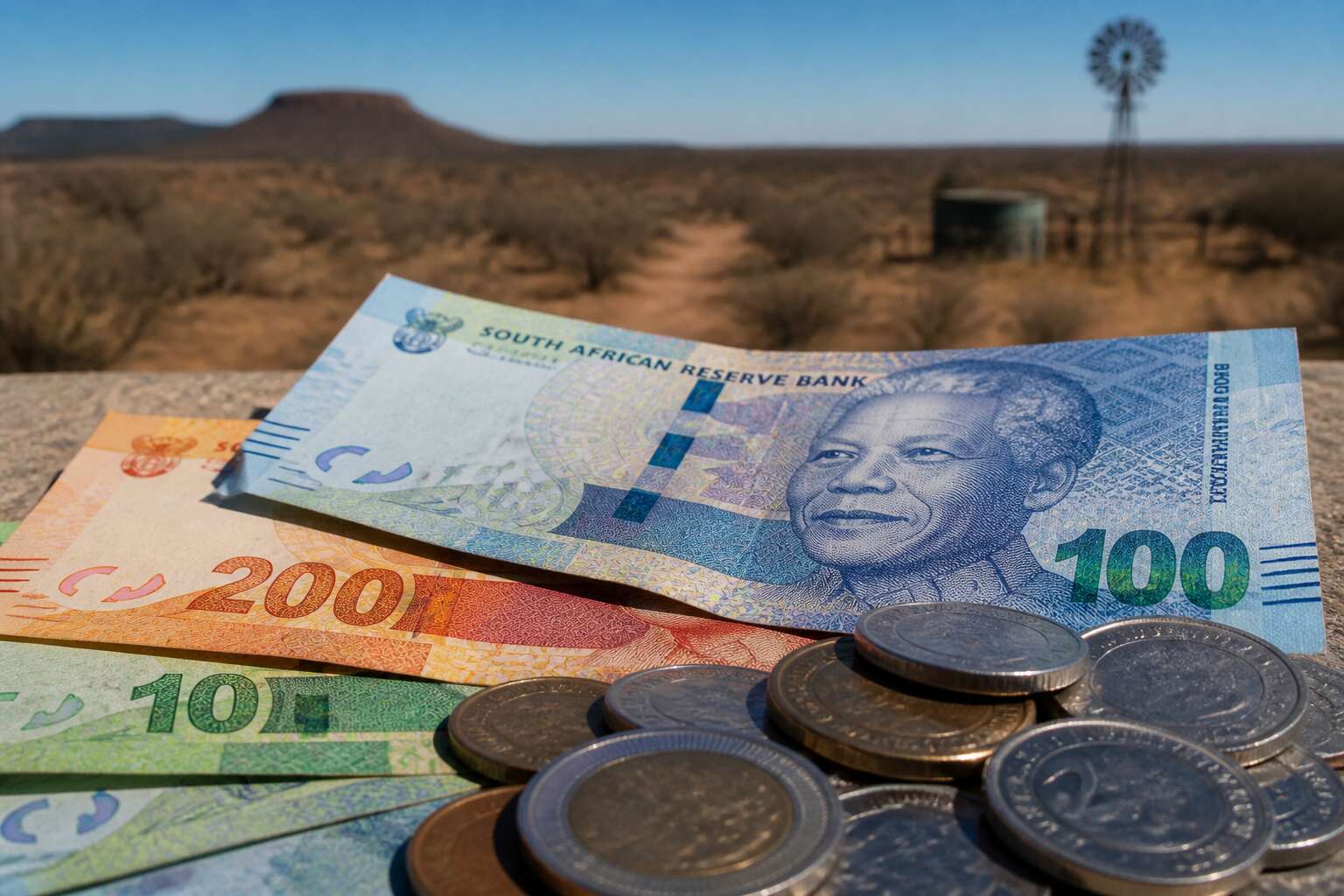
Tucked away in the arid plains of the Northern Cape, Orania presents one of the most intriguing economic microcosms in South Africa. While the town is often discussed for its cultural and political aspirations, its monetary foundation rests firmly on a familiar pillar: the South African Rand. The Orania Northern Cape South Africa currency situation is not a departure from national norms but rather a precise alignment with them, using the same notes and coins you would find in Johannesburg or Cape Town. This choice is a practical necessity, ensuring seamless trade and financial interaction with the broader national economy.
The legal framework is unambiguous. The South African Reserve Bank Act designates the Rand as the only official legal tender for all transactions within the country’s borders. Orania, despite its self-governing rhetoric, operates entirely within this legislative reality. Businesses, from the local supermarket to construction firms, quote prices in Rand and settle accounts through standard banking channels. This adherence ensures that property transfers and municipal services are legally enforceable and recognised.
This reliance on the national currency allows the town to achieve a distinct kind of financial autonomy. Instead of creating a bespoke monetary system, they focus their energy on generating their own revenue through local enterprises.
– Local businesses pay rates and taxes to the Orania Kurator, the town’s private administrative body.
– The community reinvests profits directly into infrastructure projects and property development.
– A local development company facilitates affordable housing loans, entirely denominated in Rand.
By utilising the Rand, Orania avoids the economic isolation that a custom currency would inevitably bring. The stability of the South African financial system provides a reliable foundation for their long-term vision. The flow of cash is a daily, practical link to the rest of the country, proving that economic participation and internal self-management can coexist. The currency is the great pragmatist here, connecting a fiercely independent community to the fiscal heartbeat of the entire nation, allowing for ideological separation without the crippling burden of monetary secession.
Acceptance of Coin and Banknote Denominations
Orania, located in the arid Northern Cape, is often misunderstood. The town operates as a deliberate cultural community, and its economic system is a source of frequent speculation. However, the facts regarding money are straightforward. The official currency in Orania is the South African Rand. There is no alternative currency printed or minted within the township.
A Pragmatic Approach to Commerce
The decision to use the Rand is based on practicality. Orania is situated within the borders of South Africa, and its economy is inextricably linked to the national framework. For the community to function efficiently, it must participate in the broader South African financial system. This means using the same notes and coins that are accepted in Pretoria, Cape Town, or any other city in the country. The orania northern cape south africa currency situation is simple: they use the Rand to buy goods, pay for services, and manage local taxation.
The town does have its own internal trading mechanism, which operates parallel to the Rand. The Orania Koöperasie (cooperative) issues a local electronic trading unit called the “Ora.” This is used to pay for local services like electricity and municipal rates. However, the Ora is pegged 1:1 to the Rand. It is a bookkeeping tool, not a separate currency. You cannot take an Ora note to a bank in Johannesburg and exchange it. This reinforces that the orania northern cape south africa currency strategy is about efficiency and local accountability, not about creating a monetary island.
Legal Framework and Stability
There is no legal ambiguity here. The South African Reserve Bank Act is clear. The Rand is the only legal tender in South Africa. Any attempt to operate outside of this would be illegal. Orania operates within the law. They pay their taxes to the South African Revenue Service (SARS). They participate in the national census. Their adherence to the Rand ensures that property transfers are registered nationally and that business contracts are legally enforceable.
This reliance provides significant stability. Since 2020, the community has seen growth in its economy, driven by agriculture and construction. Because they use the Rand, they have access to national credit markets and banking services. This is a rational choice for a community that wants long-term sustainability. Here is how the currency is applied in practice:
– Property Sales: All deeds and transactions are lodged and paid in Rand.
– Taxation: Residents pay national taxes via the Rand through standard banking channels.
– External Trade: Goods imported from outside the town are purchased with Rand.
The Symbolism of National Currency
The use of the Rand carries a significant symbolic weight. While the community in Orania seeks self-determination in cultural affairs, their economic policy is one of integration. They use the national currency to build their local economy, which shows a nuanced understanding of sovereignty. They do not seek to mint their own coinage because that would separate them from the legal realities of South Africa. This is a deliberate choice.
The orania northern cape south africa currency policy is a testament to the community’s practical mindset. They are building a local economic hub, but they are doing so with the tools of the national economy. The Rand is the foundation of their financial security, allowing them to trade, grow, and save within the larger national landscape. The “Ora” system is a local ledger, but the Rand is the actual legal tender that governs their economic existence. This approach ensures that they remain a viable and functional part of the broader South African economic landscape.
Regulatory Oversight by the South African Reserve Bank
The true anchor of any economic system lies in the legal architecture that upholds its currency. For the orania northern cape south africa currency question, this architecture is absolute. The South African Reserve Bank, as the central authority, holds the exclusive right to issue and regulate the Rand. No other entity within the nation’s borders possesses this power. The legal framework actively ensures that commercial life in Orania operates under the same regulations as the rest of the country.
Regulatory oversight extends beyond simple issuance. The Reserve Bank manages the monetary policy that directly influences interest rates and inflation, which affects the cost of borrowing for farmers and businesses in the town. Compliance is not a voluntary gesture. The Banks Act requires all financial institutions dealing with Orania residents to adhere to strict reporting standards, ensuring transparency and preventing the systemic risk that comes from unregulated money flows. The community is fully integrated into this monitoring.
This rigorous governance provides a predictable environment for investors and residents alike. While local projects may be coordinated through the Ora system, every external transaction is subject to national scrutiny)Skip. The Reserve Bank’s watchful eye guarantees that the value held in Orania remains durable and recognized, an assurance that no local initiative could replicate. The authority of Pretoria remains the final arbiter. The stability of the Rand is the quiet foundation upon which the town’s future is built. The complex reporting and regulation fosters a stability that is essentially seamless.
1. The SARB’s constitutional mandate exclusively secures the Rand as the official medium.
2. All commercial banks facilitating transactions in the area are licensed and audited by the national body.
3. Exchange control regulations are strictly managed, reinforcing standard economic conduct.
The regulatory framework acts as a protective shield, ensuring the town remains a normalized part of the greater South African economy.
Interaction between National and Local Payment Systems
Fewer than a thousand residents actively circulate the Ora, a local scrip pegged one-to-one with the rand. This curious arrangement does not challenge the national currency framework. It operates within it, as a private voucher system rather than a parallel currency.
When a customer in Orania tenders Ora, the merchant receives a claim on rand value, settled through the town’s cooperative clearing mechanism. The rules of engagement are straightforward:
- The Ora is not issued by any bank.
- It cannot be used outside Orania.
- It remains redeemable in rand on demand.
The rand stays the unit of account for every tax assessment, contract, and bank balance. The interaction between national and local payment systems in the orania northern cape south africa currency question comes down to hierarchy. The local system speeds up internal trade. The national system provides the legal anchor. Any conversation about orania northern cape south africa currency must respect this ordering.
The Oranian Local Currency and Its Unique Role
Genesis of the Local Money Initiative
One percent of every transaction in Orania tells a story of deliberate self reliance. This is the world of the Ora, a local scrip that functions alongside the South African rand. The Orania northern cape south africa currency landscape is therefore unique, not because it replaces the national tender, but because it creates a parallel system designed to encourage local economic circulation.
The genesis of the Ora was not born from monetary theory, but from a pragmatic need for community cohesion. Introduced in 2004, the initiative aimed to capture wealth that would otherwise leak to larger metropolitan hubs. Residents voluntarily exchange rands for Oras, accepting a small discount, to fund communal infrastructure and projects. It is a closed loop, a financial covenant between the town and its inhabitants.
The physical notes themselves are a point of pride. They are printed on polymer and feature local landmarks, avoiding the face of political figures. Consider the denominations available to users:
– Notes are issued in 10, 20, 50, and 100 Ora denominations.
– The exchange rate is fixed at a 1:1 ratio with the rand.
– The currency is only accepted within the town’s municipal boundaries.
By accepting this alternative, residents guarantee that local shops and services maintain a visible economic presence. The steady circulation of the Ora acts as a barometer for the town’s financial health. While the rand remains legal for all debts, the Orania northern cape south africa currency ecosystem encourages a preference for the local token. This is not an act of defiance against the Reserve Bank, but a measured experiment in micro economic sovereignty.
Design Features and Security Markings of the Ora
In a world of fleeting digital transactions, there is something distinctly tangible about the polymer notes of the Ora. When you hold one, you are not just holding a medium of exchange; you are holding a piece of community identity. The design process was meticulous, steering clear of the portraits that dominate national currencies. Instead, these notes feature intricate etchings of local landmarks and indigenous flora, a subtle yet powerful reminder of the specific geography that gives this Orania Northern Cape South Africa currency its meaning.
The physical craft extends beyond mere aesthetics. Security was a primary concern for the architects of this monetary system, ensuring the local tender could withstand counterfeiting attempts. Visitors often remark on the distinctive feel, a texture that differs noticeably from the standard Rand. This was achieved through advanced polymer technology, which not only increases durability but also allows for complex security features that are difficult to replicate. Some of the safeguards implemented include:
– Transparent windows with micro-printed text.
– Colour-shifting ink that changes hue under direct light.
– Unique serial numbering sequences to track circulation.
Beyond the security and the visuals, the real magic lies in the economic behaviour the note encourages. Because the Ora functions as a closed-loop system, it effectively measures the health of the local economy in real-time. When construction booms or harvests are plentiful, the velocity of the Orania Northern Cape South Africa currency increases. When times are tough, the notes move more slowly. The existence of this parallel tender dictates that businesses must offer a consistent value proposition to entice locals out of their Rands and into Oras, creating an organic quality control on goods and services that is rarely seen in larger national markets.
Eligibility and Circulation Rules for Residents
Imagine a place where the cash in your wallet quietly tells a story about the land it comes from. That is the reality in Orania, a town in the Northern Cape where the local currency, the Ora, operates with a very specific set of rules for those who call it home. This isn’t just a quirky souvenir; it’s a functional tool designed to keep wealth circulating within the community. For residents, adopting this currency is a matter of principle, a daily act of reinforcing the town’s economic independence. The system is simple on the surface, but the eligibility to use it is strictly tied to residency, ensuring that the benefits stay within the township’s boundaries.
To get your hands on this orania northern cape south africa currency, you first need to be a permanent resident. It is not something a weekend visitor can simply exchange at a counter, nor is it accepted at businesses that cater primarily to tourists passing through. The participation rules are quite deliberate and serve to strengthen the local economy’s resilience.
– Only residents can convert their South African Rand into Ora.
– The exchange rate is fixed at a one-to-one ratio, making the transition seamless.
– Transactions are encouraged for daily needs, from groceries to professional services, reinforcing the local network.
– The currency is solely for local use and cannot be deposited into standard commercial banks.
That last point is key. The Ora exists outside the national banking system, functioning as a parallel economy. This isolation is intentional, as it forces the circulation of value to remain within Orania. For the resident, this means their spending directly supports their neighbour’s business rather than a distant corporation. It is a bold experiment in economic self-reliance, where the simple act of buying a loaf of bread becomes a vote for the community’s autonomy. The system has its critics, but for those who live by its rules, the Ora is more than just paper; it’s a daily commitment to a shared future in the heart of the Karoo.
Integration with the Rand for Everyday Purchases
In a nation of stark economic contrasts, the Orania experiment offers a compelling case study in monetary sovereignty at a micro level. While the Rand remains the official legal tender for all South Africans, this town in the arid Northern Cape demonstrates how a complementary currency can reshape local incentives. The true test of the Ora lies in its practical impact on daily life rather than its ideological underpinnings.
The mechanics of the system are surprisingly frictionless. When a resident deposits Rand into the town’s designated accounts, they receive Ora at the fixed exchange rate. This conversion is voluntary, but the benefits are immediate. Many businesses offer small discounts for cash payments in Ora, effectively bypassing bank transaction fees that erode profit margins. This creates a tangible financial advantage for those who participate, encouraging a cycle of spending that keeps wealth within the community.
Beyond the economics, there is a distinct social dimension to this financial tool. Using the local currency signals a commitment to the town’s long-term survival, a deliberate choice to support neighbors over faceless corporations. For new residents, acquiring Ora is a rite of passage that marks their formal integration into the community.
However, the system is not without its limitations. The closed loop requires a high level of trust and constant vigilance to prevent counterfeit notes, a task undertaken by the town’s own security teams. Furthermore, the currency is essentially illiquid outside the town’s borders, which means residents must keep a strategic balance of Rand for travel and external purchases.
The impact, nonetheless, is measurable in the bustling local shops and low vacancy rates in commercial properties. The constant circulation of money creates a multiplier effect that keeps the local economy resilient. In essence, the Ora functions as a constant reminder that money is a tool for building the kind of society one wishes to inhabit, reinforcing the community’s unique identity with every transaction made.
Impact on Local Business and Community Loyalty
Step into a busy Orania cafe and you will see the Ora in action. This local scrip does more than facilitate trade. It builds a closed loop of loyalty that national currency cannot replicate. When residents pay in Ora, they are making a deliberate choice to support their neighbours first. The orania northern cape south africa currency system directly rewards local spending through small discounts and faster settlement times.
For business owners, the benefits are concrete. Lower banking fees, predictable cash flow, and a customer base that returns week after week. That combination creates a resilience you rarely find in small towns.
- Local shops report steadier foot traffic during off-peak seasons.
- New businesses find it easier to establish trust with regulars.
The result is a commercial environment where community ties and commerce reinforce each other.
Limitations and Non-convertibility Outside the Town
The Ora has a hard boundary. It works within Orania’s perimeter, but once you cross the town limit, the notes lose their power. No shop in Kimberley or Cape Town will accept it. No bank will exchange it. That non-convertibility is not a flaw. It is a deliberate design to keep wealth inside the community.
This means the orania northern cape south africa currency functions more like a closed loop than a conventional tender. If a resident leaves permanently, any Ora held must be spent locally or converted back through the town’s own system. There is no external market for it.
Consider the practical effects:
- Travellers must carry rand for anything outside town.
- Online purchases require national payment methods.
- Tourists cannot take Ora home as a usable currency.
The limitation is exactly what makes the system work.
Exchange, Banking, and Access for Visitors
Portfolio of Currency Exchange Services in Orania
Orania might be the only town in South Africa where you need to think about two currencies. For visitors, the practicalities are straightforward. The South African Rand remains king. You will need cash for many transactions, and card facilities are common at guesthouses and larger businesses. But the Ora, the town’s own scrip, is everywhere. It is not legal tender, but it is accepted with ease. The exchange rate is always one-to-one. A Rand buys an Ora.
It is a cash-centric existence, but not a confusing one. The locals manage both systems without friction. You can convert your money at designated exchange points in the town. The process is simple and transparent, with no hidden fees.
The banking infrastructure here is unique. There are no major bank branches in the central business district. Instead, the Orania Co-operative acts as the primary financial hub for both residents and visitors. You will not find traditional ATMs dispensing Oras. Your standard bank card will work at the few ATMs in town, but they dispense Rand.
For a seamless experience, I would recommend the following:
– Bring a mix of Rand notes and a bank card for backup.
– Use an established exchange bureau for Ora conversion.
– Keep your Ora for local purchases and your Rand for any travel beyond the town limits.
This system ensures that the orania northern cape south africa currency landscape remains stable and predictable. The local money initiative isn’t about replacing the Rand, but about creating a closed-loop economy. For the visitor, it is a fascinating glimpse into a functioning alternative system, one where your spending habits directly support the community you are visiting. Just remember to convert your remaining Oras back to Rand before you leave. They hold no value anywhere else, which is a practical consideration, not a political one.
Availability of ATMs and Digital Payment Terminals
Tucked away in the arid plains of the Northern Cape, a fascinating economic experiment unfolds. Orania, a town often discussed but rarely understood, operates with a dual-currency system that challenges conventional notions of local commerce. The Orania Northern Cape South Africa currency is not a rejection of the Rand, but rather a parallel system designed to foster community resilience and local economic velocity. It is a practical demonstration of how a small, self-governing community can create tangible financial tools that reinforce a shared identity.
When you arrive, the first thing you notice is the seamless way this alternative system coexists with the national economy. Visitors can exchange their Rand for Ora at a one-to-one rate, a simple process managed by the town’s own financial cooperative. This currency, affectionately called the “Ora,” represents a commitment to keeping wealth circulating within the town’s boundaries. It is a subtle but powerful mechanism; every purchase at a local bakery or hardware store directly supports a neighbor, creating a multiplier effect that would otherwise be lost to larger, distant metropolises.
The Banking and Exchange Process
Navigating the financial landscape here is surprisingly straightforward. The town’s banking cooperative handles all conversions, ensuring that businesses and individuals have easy access to the local tender. You won’t find a complex network of international banks, but you will find a highly efficient, purpose-built system.
– Exchange Rate: Fixed at 1 Ora to 1 Rand, eliminating speculation and simplifying cash flow.
– Accessibility: Exchange services are available at designated points, including the main cooperative office and select retail hubs.
– Account Services: Residents can hold business accounts denominated in Ora, allowing for seamless local transactions without needing to convert every single payment.
Practical Tips for Visitors
For those spending time in the town, the practicalities are clear. The Ora is the preferred method for daily transactions, from paying for a meal at a local restaurant to purchasing handcrafted goods in the town square. However, the system is pragmatic. Businesses accept Rand, but it is common practice to convert your cash to get the most out of the local experience. It is a way of participating in the community’s economic vision.
This system is not insular; it is designed to be accessible.
1. Convert at your accommodation: Many guesthouses offer exchange services to their guests, making it incredibly convenient.
2. Use the main cooperative: The central financial hub is the most reliable place for larger exchanges.
3. Just ask local shop owners: They are accustomed to visitors and are always happy to guide you on how to get the local currency.
The genius of this system lies in its limitations. Because the Ora is not convertible outside the town, it cannot be hoarded or speculated upon. It forces a choice: to participate in the local economy or to hold onto the national currency. This constraint ensures that the money is always working for the community, encouraging a flow of goods and services that strengthens the social fabric. For the visitor, it offers a unique, hands-on lesson in alternative economics, proving that money can be more than just a medium of exchange; it can be a bond that ties people to a place and to each other. The experience is a powerful reminder that monetary systems are ultimately human constructs, capable of being shaped to reflect specific values and aspirations.
Commercial Banking Options for Temporary Residents
For temporary residents, the local financial cooperative extends services that bridge the gap between national banking and the Ora system. Access to commercial banking in Orania Northern Cape South Africa currency requires a simple account setup, often completed in a single afternoon. These accounts function on a prepaid basis, which encourages deliberate financial planning.
– Provide your passport and proof of residence to the cooperative’s business desk.
– Fund the account in Rand to receive an equivalent balance in Ora.
– Use the account for rent, utilities, or subcontractor payments.
This setup eliminates the friction of daily conversions for long term stays. The commercial banking options for temporary residents do not include credit facilities, but the frictionless transfer between systems proves highly effective for managing cash flow. For the self-employed, it offers a clear, auditable trail that connects local spending directly to the local economy’s resilience.
Using Foreign Cards and Mobile Wallets in the Area
Foreign cards hit a boundary in Orania. The Ora system runs on its own rails, separate from international banking networks. Mobile wallets do not connect to it. I have watched visitors pause at the cooperative desk, expecting a tap and go transaction, only to learn that verification happens face to face.
The sequence is simple:
1. Present a foreign card at the business desk.
2. Authorise a Rand withdrawal.
3. Receive Ora for local purchases.
That separation keeps the orania northern cape south africa currency stable and insulated. The process takes minutes for a day visit. For longer stays, it becomes a familiar ritual. Preparation matters more than spontaneity, but that is the cost of a self-contained economy.
Handling Cash for Informal Transactions and Vendors
The unmistakable click of a card reader is noticeably absent in Orania. Visitors often arrive with a reflexive swipe of their bank card, only to find that the town operates on its own financial logic. The local currency, the Ora, sits at the heart of this system, functioning parallel to the Rand. For those navigating the orania northern cape south africa currency landscape, the first rule is simple: cash is king, especially if you are dealing with informal traders or smaller vendors who might not have a digital point-of-sale device for the local currency.
For the traveler, the banking routine requires a small shift in perspective. Standard commercial banks and ATMs are not located within the town limits. To access Rand, visitors must plan ahead before arriving or travel to a nearby town. Once inside Orania, the exchange process is deliberate and transparent. You bring your Rand notes to the central exchange office or a participating business to convert them into Ora.
The procedure is straightforward:
1. Present your physical Rand notes at the designated exchange counter.
2. Complete a simple verification form for record keeping.
3. Receive your Ora at the official exchange rate, ready for spending.
This process ensures that the physical notes remain anchored to a tangible value. Consequently, you will need to rely mostly on physical cash for settlement. While the Ora is widely accepted among the local shops for everyday purchases, from groceries to hardware, the need for Rand does not disappear entirely.
Informal transactions, such as buying produce from a resident’s stall or paying a local guide, are conducted strictly in cash, either Ora or Rand depending on the seller’s preference. The judgment call is left to the vendor, which adds an organic, human touch to every purchase. Because the system is physically grounded, you will find that carrying a combination of both currencies provides the greatest flexibility. The Ora handles the local, community-focused economy, while the Rand serves as the universal fallback for any external obligations or unexpected expenses that may arise during your stay.
Economic Context and Currency Stability Considerations
Effect of Rand Volatility on Local Pricing and Savings
The economic pulse of Orania Northern Cape South Africa currency remains inseparable from the rand’s daily rhythm. Global market shifts, interest rate decisions, and commodity prices all affect this small town. When the rand weakens, imported goods on local shelves become pricier within days. That influences how families budget and how businesses set their margins. The Ora offers a stable internal unit, but it cannot sever the link to the broader monetary system. For savings, volatility creates real uncertainty. Local traders adjust their pricing based on the exchange rate, which makes everyday costs feel unpredictable. These adjustments usually show up in three ways:
- Retail prices for imported goods move first and fastest.
- Service fees, like repairs and professional rates, follow within weeks.
- Long term savings plans get reviewed when the rand swings sharply.
A stronger rand eases pressure on household budgets, while a weak rand forces hard choices for anyone managing money in Orania.
Price Index and Inflationary Trends within Orania
In a world of fluctuating fiat currencies and unpredictable monetary policy, the small town of Orania in the Northern Cape presents a fascinating experiment. The concept of the orania northern cape south africa currency is not just about local tender; it represents a broader ideological stance on economic self-determination. While visitors might expect a museum piece, the reality is far more pragmatic, as the community navigates the complex intersection of a global economy and a localized vision.
For anyone observing the economic pulse of this region, the stability of the rand remains the primary engine. The local initiative, known as the Ora, is cleverly pegged to the value of the Rand to prevent the chaos of a floating micro-currency. However, the true stability of the orania northern cape south africa currency model doesn’t come from fancy printing presses; it comes from strict financial discipline. The town’s leadership understands that a currency is only as strong as the trust the community places in it, and that trust is built on transparent budgeting and a zero-debt philosophy.
That said, economic stability is rarely a static achievement. Even with a pegged system, the community is not fully insulated from the shocks of the national grid. When the South African Reserve Bank adjusts interest rates, the ripple effects are felt in Orania’s local property market and business loans. Consequently, local economists and business owners keep a sharp eye on inflationary trends. To mitigate these pressures, the town has adopted a unique approach to pricing and labor:
– Value-Based Pricing: Goods and services are often priced with a focus on intrinsic value rather than speculative market bubbles.
– Local Production Incentives: There is a strong push to manufacture and grow goods locally, reducing exposure to imported price hikes.
– Skill-Based Labor: The economy prioritizes artisan skills over administrative bloat, ensuring that productivity directly correlates with income growth.
Interestingly, the conversation around the orania northern cape south africa currency often overlooks the cost of living challenges. While inflation might be lower than the national average, it is not zero. Residents still feel the pinch when fuel prices rise, affecting transport and logistics for goods coming from Johannesburg or Cape Town. The “cheap” reputation of the town is often a myth today; it is actually a place of high efficiency where every rand—and every Ora—is expected to work hard. This culture of thriftiness, however, creates a distinct economic resilience that is rare in modern South Africa.
Looking ahead, the monetary model offers a case study in survival. It demonstrates that a community can operate with a dual-currency system without undermining the authority of the state. The orania northern cape south africa currency serves as a constant reminder that money is ultimately a social contract. As long as the residents of Orania continue to honor that contract, and as long as the rand remains manageable, the town will continue to thrive. It is a bold, living proof that even the smallest economy can find its footing if it respects the delicate balance between local values and global realities.
Role of the Local Currency in Reducing Transaction Costs
Purely as a payment tool, the orania northern cape south africa currency performs a quiet but vital function. It trims transaction costs in ways that feel almost mundane. A plumber here settles a job in Ora tokens, no bank charges, no waiting days for a transfer. For local businesses, that efficiency translates directly into lower overheads.
Currency stability considerations are refreshingly dull, which is exactly the point. The Ora is pegged to the rand, so there is no speculative gambling. The town publishes its reserve numbers openly, and residents treat that transparency as a matter of civic pride.
The practical savings are visible:
- No card processing fees on local purchases
- No settlement delays between banks
- No currency conversion surprises
That is the quiet genius of the whole arrangement. It is not flashy, but it works, day after day.
Investment Vehicles and Deposit Strategies for Long-term Growth
Comparative Analysis with Other Regional Currencies in South Africa
The Northern Cape remains South Africa’s most sparsely populated province, a fact that shapes Orania’s economic insularity. This isolation is deliberate. It reduces external shocks and keeps local pricing anchored to internal supply and demand. While the Rand still dominates every transaction, the town’s small scale creates a buffer against the macroeconomic jitters felt in larger metros. When inflation spikes nationally, Orania’s price index often lags, offering a glimpse of a slower-moving cost curve.
Comparing this setup to other regional currencies in Southern Africa reveals distinct philosophies. Look at the Lesotho loti or the Namibian dollar, both pegged at par to the Rand. They are national currencies, subject to sovereign debt and central bank policy. The Ora, by contrast, is purely a community instrument. It does not float or peg; it simply converts one-to-one at the local exchange office. This eliminates exchange rate risk within the town.
– The loti and Namibian dollar carry sovereign risk.
– The Ora carries only local credence risk.
– Neither rival currency enjoys the Ora’s non-convertible status for outsiders.
For anyone tracking the orania northern cape south africa currency landscape, this distinction matters. The Ora’s value is not determined by forex markets but by the community’s productivity. That makes it a fascinating case study in monetary autonomy. While the Rand remains the bedrock, the local system demonstrates how a small population can engineer a stable medium of exchange. This stability is not monetary policy; it is social contract.
Practical Tips for Managing Money in Orania
Budgeting Essentials for a Multi-Day Stay
The trick to managing money in Orania is to treat your cash like a finite resource, not a suggestion. For a multi-day stay, you need a clear picture of your daily ceiling before you even unpack. A simple daily cap on spending prevents the shock of a cumulative total from ruining your trip. This is a basic principle of the orania northern cape south africa currency system, which rewards those who plan.
Consider your meal costs carefully, as they fluctuate. Take a hard look at your accommodation and activity plans, then add a buffer of about fifteen percent. That buffer is your only protection against unexpected entry fees or a sudden change in plans.
Here is a sensible approach to divvying up your daily budget:
– Allocate 40% for accommodation.
– Set aside 35% for food and drink.
– Reserve 20% for activities and entry fees.
– Keep 5% as a safety net for incidentals.
Ultimately, your discipline determines whether you are on a vacation or a financial tightrope. Plan for the worst, pay for what you need, and you will keep your finances intact.
Common Pitfalls When Converting Foreign Money
When you exchange foreign money in Orania, the first mistake is treating the Ora like a collectible. It is not a souvenir. It is a local voucher with strict circulation rules. The second pitfall involves the orania northern cape south africa currency system itself: unofficial changers will offer you a glamorous rate, but their notes have no standing with the South African Reserve Bank. Your hotel manager will laugh, politely, when you try to spend them in Bloemfontein.
A sensible traveller avoids these errors:
- Never accept Oras from anyone except a registered exchange desk.
- Confirm the Rand equivalent before you hand over foreign notes.
- Do not assume leftover Oras can be converted back outside town limits.
I once watched a tourist argue with a vendor over a ten Rand difference while holding a stack of unusable Orania bills. Do not repeat that performance.
Best Practices for Using the Ora Effectively
In Orania, a town in the Northern Cape, the local currency operates alongside the rand. This system, known as the Orania voucher, functions as a community-driven initiative to encourage local spending. For visitors, understanding its nuances can be the difference between a seamless transaction and a frustrating negotiation.
The primary rule is that the voucher is exclusively for internal trade. You cannot use it to pay for fuel outside the town or settle a bill in a neighbouring municipality. You exchange rand for the voucher at designated offices, and the rate is always one-to-one. However, the critical detail is that the voucher is non-refundable. Once you convert your money, you must spend it within the town’s borders before you leave, or you will carry worthless paper home.
Here are the key points to remember when handling this unique form of payment:
– Conversion Limits: There is often a cap on how much you can change in a single day, so plan your purchases accordingly.
– Acceptance Scope: While most local businesses accept the voucher, some services, particularly those involving external suppliers, may require payment in standard South African rand.
– Change Policy: You will typically receive your change in voucher form as well, not in rand, which perpetuates the cycle of local spending.
Ultimately, this system is a psychological prompt. It forces you to pause and consider the value of what you are buying, tethered directly to the prosperity of the community you are visiting. For a traveller, it is a lesson in mindful consumption. You are not just buying a meal or a craft; you are participating in a deliberate economic experiment, one where your cash flow is intentionally redirected to support a specific vision of sustainability. It is a unique quirk of the orania northern cape south africa currency landscape that demands a bit of pre-planning, but it is part of the town’s distinct character.
Security Advice for Carrying Large Sums of Cash
Carrying a large sum of rand through the streets of Orania requires a measure of calm. The town is safe, but the orania northern cape south africa currency system means you must convert cash into vouchers at designated offices. I recommend splitting your money into separate pockets, keeping only the day’s projected spend in reach.
Consider these habits for staying discreet:
– Avoid counting notes in public.
– Store daily conversions separately from your passport.
– Exchange only what you intend to use, because vouchers do not convert back.
The risk of loss forces you to move deliberately. Large cash sums become a liability the moment you arrive, so treat the conversion office as your first destination, not your last.
Understanding Tipping Etiquette and Service Charges
Orania presents a unique financial landscape that demands a shift in mindset. While the broader South African economy relies on the rand, this town operates with its own parallel system. The orania northern cape south africa currency is the Ora, a local scrip designed to keep wealth circulating within the community. You cannot simply use it elsewhere, so your strategy for managing money here requires deliberate planning.
Understanding the flow of cash is the first step to a smooth visit. The Ora is pegged to the rand, so its value is stable, but your rand has no direct use in many local shops. You must convert your national tender at the designated exchange offices, which usually operate during standard business hours. This means you need to think ahead. If you arrive on a weekend or public holiday, your access to local currency is limited until the offices reopen.
Beyond the mechanics of exchange, the practical handling of funds takes on a different character. Because the town is relatively small and closely knit, transactions often occur face to face. Here are a few habits that will serve you well:
– Carry a mix of smaller denominations for daily purchases, as change for larger notes can be scarce at market stalls or smaller vendors.
– Keep a separate, secure stash of rand for emergencies or for any purchases made outside the town’s borders.
– Track your spending mentally, since relying on card machines is not always an option, and you want to avoid running low on Ora at an inconvenient time.
The rhythm of spending slows down here, and that is intentional. You will find that the digital payment terminals available are often limited to the main cooperative stores, while smaller enterprises operate exclusively on the local scrip. This blend of old-fashioned cash handling and modern necessity means you must be comfortable with carrying a wallet full of notes again. It is a practical reminder that the orania northern cape south africa currency is not just a novelty; it is the lifeblood of the local economy, and treating it with respect will make your stay far more seamless.



0 Comments