
Choosing the Right Base for Your Northern Cape Adventure
Staying Near the Kalahari
The Kalahari demands respect. Its distances are deceptive, and the roads punish the unprepared. Choosing the right base for your northern cape accommodation changes everything!
I have watched travellers waste entire days driving back and forth to the park gates. A lodge near the Kalahari’s edge acts as a strategic anchor. You push into the dunefields at dawn and retreat before the heat turns hostile.
- Check the distance to the Augrabies Falls entrance gate.
- Confirm the water supply before booking.
- Ask about the condition of the final gravel stretch.
Your northern cape accommodation should put you within striking distance of the wild, not leave you stranded at the end of a bad road.
Historic Towns Like Kimberley
Kimberley is a different kind of gateway. The Big Hole draws visitors, but the city itself offers northern cape accommodation that places you near the region’s turbulent history. You wake up to the sound of trains and the smell of dust on the wind, reminders that this town was built on extraction and ambition.
A stay here means you can explore the Kimberley Mine Museum in the afternoon and drive to the Mokala National Park in the early morning. The roads are tarred, the fuel stations are reliable, and the cellphone signal is consistent. Those details matter when you are planning a longer itinerary.
Consider what this base offers:
- Access to the N12 and N8 routes
- Secure parking for a vehicle loaded with supplies
- Restaurants that serve dinner past 8pm
That last point matters more than you think. Your northern cape accommodation should serve your days, not complicate them.
Riverside Retreats Along the Orange
The Orange River crosses the country’s driest province for over a thousand kilometres, and near Upington and Kakamas it produces the Northern Cape’s greenest stretch. Date palms and muscat grapes line the banks while the plains beyond stay stubbornly dry. That contrast shapes every riverside stay.
I have found that a river-facing room resets a driver better than any town hotel. The irrigation pumps hum in the background through the evening, and the smell of wet soil replaces the dust that clings to your vehicle after long gravel roads. It is a small shift, but it changes how you start the next day.
- Farm cottages near Keimoes that work alongside the annual date harvest
- Kakamas guesthouses positioned along the Orange River trail
- Self-catering units at Groblershoop with lawns that meet the water’s edge
From these bases, the Augrabies Falls is a short morning drive, and the return road follows the river’s curve. Your northern cape accommodation here gives you the water at dawn and the desert by noon.
Desert Lodges and Guest Farms
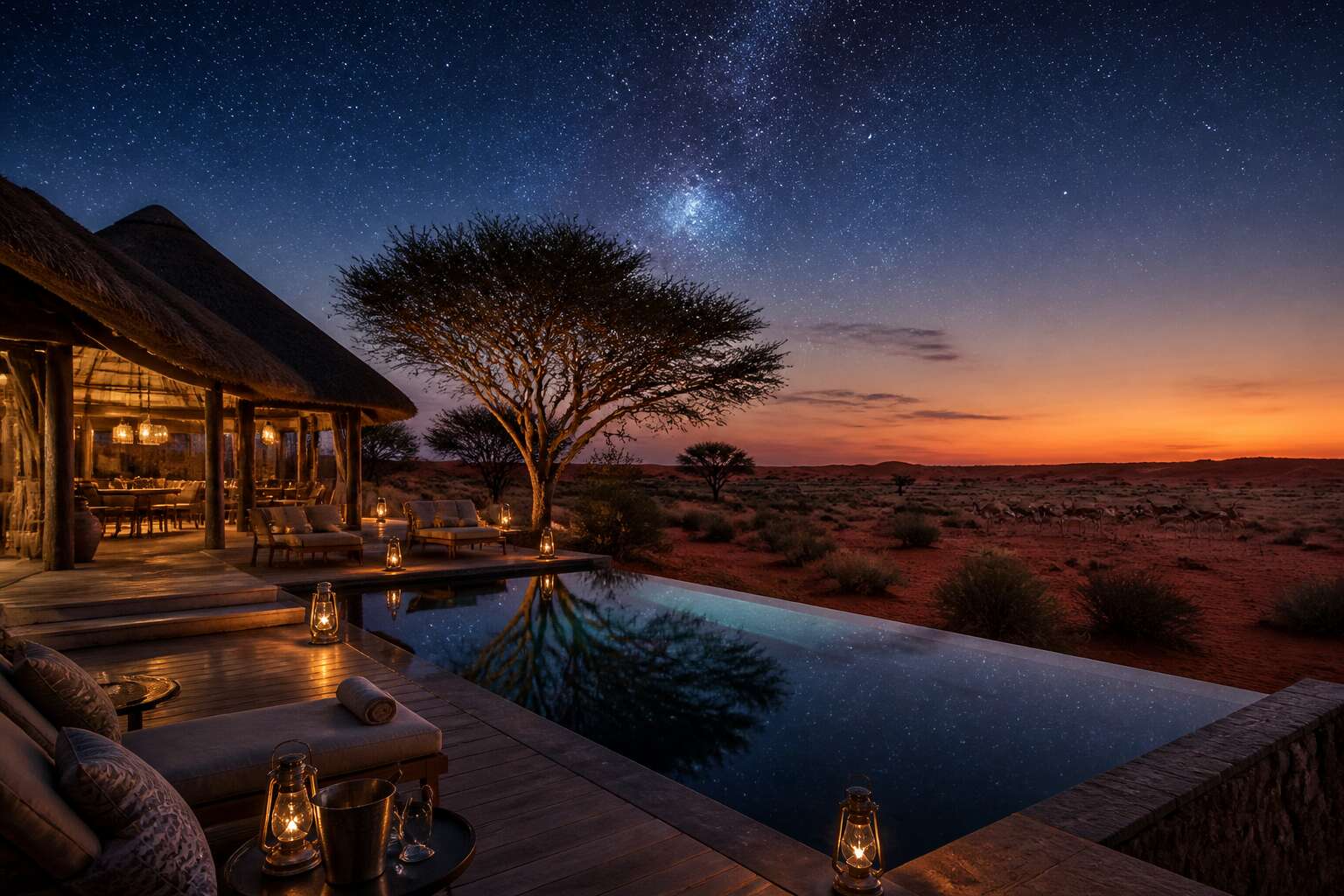
The Northern Cape’s interior rewards those who choose a base with deliberate care. Desert lodges and guest farms sit far from the irrigated riverbanks and the weathered mining towns, offering a different kind of stillness. Here, the land is measured in horizons, not hectares, and the light behaves like a living thing. A well-placed northern cape accommodation should orient you to the sun’s path and the prevailing wind, because those two forces shape every hour of the day.
When evaluating these properties, I look for three practical signs:
- Solar or hybrid power systems, since grid failures are common in the open veld
- Covered outdoor seating that faces west, for the late afternoon glow
- No ambient light for at least ten kilometres, which guarantees the Milky Way in full
Guest farms often include a simple meal with the stay, and that matters after a long gravel drive. The right base is not about luxury, but about alignment with the landscape’s rhythms. You wake with the jackals, eat when the heat peaks, and drive only during the golden hours. That is how the desert becomes readable.
Types of Accommodation to Suit Every Travel Style
Self-Catering Cottages and Chalets
The Northern Cape covers nearly a third of South Africa’s landmass yet holds less than two percent of its people. That emptiness is why self-catering cottages and chalets here feel different. You become a temporary resident of a landscape that refuses to be rushed.
Most Northern Cape accommodation here uses stone or sun-baked brick, with wide verandas facing the veld. A typical morning involves grinding coffee while a korhaan calls beyond the fence. Some properties offer:
- Fully equipped kitchens with gas stoves
- Private braai areas with wood supplied
- Linen and towels included, but no daily housekeeping
Practical details matter when your nearest shop is sixty kilometres away. Packing a cooler box becomes a ritual. I have stayed in a few of these, and the silence takes getting used to! The quiet is the real amenity, and this Northern Cape accommodation style rewards self-sufficiency.
Luxury Safari Lodges
The Northern Cape holds one of Africa’s lowest population densities, which is why its luxury safari lodges feel impossibly private. I have woken to the sound of lions coughing in the distance, then taken coffee on a deck overlooking a waterhole that no one else had visited for days. This northern cape accommodation strips away the fuss, leaving room for raw encounter and deep rest!
- Solar powered suites with floor to ceiling glass
- Guided bush walks that end at a silver service breakfast
- Stargazing beds rolled out under the Milky Way
Operators here rely on quiet expertise rather than spectacle. Trackers interpret the sand with accuracy. Meals arrive at your door with no announcements. You soon forget that luxury can be silent.
Boutique Guesthouses and B&Bs
With roughly three people per square kilometre, the Northern Cape is the country’s emptiest province. That solitude extends to its boutique guesthouses and B&Bs, where hospitality feels personal because it has to be. Owners here are former farmers, geologists, or artists who turned spare rooms into sanctuaries. They will tell you which town’s coffee is worth the drive and which dirt road is lying about being passable.
This northern cape accommodation trades five star fuss for genuine attention. Expect handmade soap, fresh farm bread, and a resident dog who supervises breakfast. The rooms vary wildly, which is the point.
- Victorian cottages in Namaqualand mining towns
- Karoo stone houses with springbok pie on arrival
- Riverfront suites with private verandas
Each stay is an argument for slowing down, and the owners are happy to make that argument over a second cup of rooibos.
Camping and Caravan Parks
There is a particular quiet that settles over a Northern Cape campsite after the braai coals fade. With some of the darkest skies in the country, stargazing here replaces television. Camping and caravan parks range from municipal grounds next to petrol stations to private farms with proper ablution blocks and donkey boilers. The best sites offer shade, clean water, and a level stand for your rig. Bring your own everything, because the nearest shop might be 80 kilometres away!
What makes this northern cape accommodation distinct is the space. You will not hear neighbours unzipping tents at dawn. Instead, you might share a site with a pair of sociable springbok. Many parks sell firewood at reception. The essentials are simple:
- level stands with electrical points
- hot showers with pressure
- a braai area with a windbreak
Farm Stays and Rural Homestays
A farm stay in the Northern Cape is less a booking and more an invitation into a working landscape. You wake to roosters, not alarms. The day’s rhythm follows the sun and the livestock.
Rural homestays pair you with hosts who know the land intimately. They can point out a camelthorn’s medicinal bark or the exact gravel road to a forgotten spring. These are not curated experiences. They are lives shared momentarily.
- Meals often come from the farm’s own kitchen garden
- Guests may help with morning chores, if they wish
- Accommodation ranges from a spare room to a renovated shearing shed
What stands out is the honesty. No manufactured luxury, just hot water and real stories. This is northern cape accommodation at its most genuine.
Key Destinations and Where to Book
Augrabies Falls National Park Area
The thunder of Augrabies Falls lingers after you leave. This corner of the Northern Cape offers a raw landscape where the Orange River carves through ancient granite. Choosing the right northern cape accommodation here means balancing proximity to the falls with access to quiet surrounds.
Most visitors base themselves at the park’s chalets, which sit close to the main viewpoints. For the town of Kakamas, 40 minutes west, guesthouses present a more local feel. Booking directly with the park is wise during peak season, though private lodges often have last minute availability.
- Book through the park’s reservation system for the main rest camp.
- Use regional booking platforms for lodges in Kakamas.
- Contact Upington B&Bs directly for longer stays.
Each option places you within reach of the falls as well as the lesser known trails along the gorge.
Namaqualand in Bloom Season
Namaqualand in bloom season is a brief, violent flowering. The semi desert erupts into colour for a few weeks between August and September, and the display shifts with every rain front. Choosing northern cape accommodation here means planning around the flowers, not the facilities. The best stays are often working guest farms or seasonal camps that open only for the bloom window.
Book with the right channels and you will wake inside the colour:
- Namaqua National Park chalets go through SANParks reservations.
- Kamieskroon guesthouses take direct calls and track the daily bloom front.
- Nieuwoudtville flower cottages open in July for bookings and sell out fast.
Each base places you along the flower routes, where the daisies track the sun and the air smells of wild camomile. The northern cape accommodation options here are fewer than elsewhere, which is exactly the point.
The Green Kalahari
The Green Kalahari stretches along the Orange River from Upington to the Namibian border. The water changes everything here. Instead of red dunes, you find date palms and vineyards. Northern cape accommodation in this strip is clustered around irrigation towns, each with its own booking reality.
Upington and Kakamas have the most options. Keimoes is quieter. Kenhardt offers almost nothing, so you plan around the guest farms that book directly.
Three booking rules matter here:
- Phone the guest farm first, the online portals rarely list the smaller places.
- Check if the price includes a river permit.
- Ask about the grape harvest dates before you reserve.
The best northern cape accommodation in the Green Kalahari is often a room above a working farm office, with the river pump humming below you at night.
The Richtersveld Transfrontier Park
Only 40 percent of the Richtersveld Transfrontier Park is reachable by ordinary vehicle. That statistic shapes every booking decision. Visitors who want the lunar landscape need a 4×4, and northern cape accommodation inside the park reflects that reality.
Most travellers book through the South African National Parks portal for rest camps at Sendelingsdrift and De Hoop. The Richtersveld Community Conservancy manages rustic sites at Kokerboomkloof and Tatasberg, which require direct arrangement.
Key destinations to plan around:
- Sendelingsdrift, the main entry point with the pont crossing into Namibia
- De Hoop camp, set among the kokerboom forest
- The remote wilderness camps for self-sufficient travellers
Online calendars lag here, so phone calls secure the best sites. The finest northern cape accommodation in this park is the kind that forces you to slow down.
Kimberley and Surrounds
Kimberley anchors the northern cape accommodation market with a rhythm distinct from the desert parks. The city’s urban core offers easy access to restaurants and business hubs, but the true value lies in the immediate surrounds. Mokala National Park sits 70 km south with options from eco-camps to luxury villas. Kamfers Dam provides seasonal viewing of flamingos, so booking near the water requires timing.
Where to book depends on your base:
- Mokala’s official portals for the park’s sanctioned units
- Discovery and Travel agents for villa weekends
- Direct calls to private guesthouses in Barkly West
Online calendars lag for private properties, so a phone call secures the best northern cape accommodation. My own Mokala weekend required three calls before finding an open villa!
Upington and the Gariep
Upington is the province’s second city, a date palm settlement on the Gariep where the river runs wide and slow. The northern cape accommodation scene here leans into the water. You sleep within earshot of the current, waking to the slap of oars from early paddlers.
The Gariep itself is the draw. Above the town, the river narrows into canyons; below, it broadens into farmland. Booking requires strategy:
- Riverfront guesthouses sell out weeks ahead for summer weekends
- Houseboat charters need deposits paid before confirmation
- The Kalahari-Oranje Museum curator keeps a list of reliable B&Bs
Phone the property directly. Digital calendars rarely reflect the seasonal rush of the date harvest, when rooms vanish overnight. A direct call also reveals which units have river access and which merely claim it.
Practical Tips for Securing the Best Stay
Best Time to Book for Peak Season
The Northern Cape sees visitor numbers double during April and September, and that is no accident. For northern cape accommodation, those months demand strategic planning. I have learned to book at least four months ahead for peak season, because the demand comes from Namaqualand blooms and the Kalahari’s milder weather. School holidays fill guest farms quicker than you expect.
Consider weekends carefully. A few practical steps make securing a spot less stressful.
- Ask about single night surcharges before you commit.
- Check if the property has generator backup for summer heat.
- Confirm whether the rate includes breakfast or other meals.
Finally, keep an eye on local events such as the Kimberley Diamond Cup. They push occupancy higher without warning. A midweek arrival always gives you better rates and more choices, so plan around that.
Understanding Off-the-Grid Facilities
Nearly 60% of northern cape accommodation operates without municipal power. That is not a warning. It is an invitation to understand your booking. When you go off-grid, you trade a few luxuries for quiet and starlight.
I have learned to interrogate hosts about their infrastructure. Ask about solar capacity, generator hours, and water supply. These details dictate your comfort more than the thread count.
- Confirm the geyser is solar or gas. A cold shower at 5am is a terrible wake-up call.
- Ask about water pressure and whether the supply is borehole or municipal. The taste matters.
- Check load shedding backup. Some places switch over seamlessly, others leave you in the dark for hours.
Off-grid does not mean roughing it. Many northern cape accommodation owners have refined their systems to perfection. Just ask the right questions before you arrive.
Pack for the Climate
Northern Cape accommodation sits in a landscape of extreme temperature swings. A June morning can start at minus five, then climb past twenty by noon. Packing for that range saves your trip. Bring layers you can add or remove quickly. The sun is brutal, so a wide-brimmed hat and high-SPF sunscreen are non-negotiable. Remember these essentials:
- Thermal base layer and fleece
- Windproof jacket
- Refillable water bottle
- Zip-lock bags for electronics
Dust gets everywhere, so seal your devices. Water is essential. Hydrate constantly, even if you are not thirsty. Check your northern cape accommodation’s amenities before you pack. Some guest farms provide towels and soap, but not all. A well-chosen bag keeps you comfortable from sunrise to sundown.
Booking Direct vs. Aggregators
A quiet phone call to a guest farm often reveals rooms that never reach the booking portals. Aggregators display a limited range of northern cape accommodation, and their algorithms favour high volume listings. Booking direct removes the intermediary, and many owners offer a lower rate when you skip the commission.
Ask about the essentials before you commit. The landscape demands patience, and punishes assumptions. Some lodges rely on solar power and switch off inverters at midnight. Others have borehole water that tastes strongly of minerals. A direct conversation surfaces these details.
Consider these points when weighing your options:
- Compare the final price after booking fees and levies.
- Check cancellation policies, which are often stricter on third party sites.
- Request a specific unit number or view, something aggregators rarely allow.
Your northern cape accommodation should match your plans, and a five minute call is more useful than an hour of scrolling!
Leveraging Local Reviews
The Northern Cape keeps its verdicts behind closed shutters. Online ratings for northern cape accommodation often echo the loudest voices, not the truest ones. Local reviews, gathered from farm stall owners and the regulars at dorps cafes, bypass that noise. These people remember the guesthouse that flooded in the February storms and the lodge that kept its borehole water cold through the December heat.
Their observations cluster around details that matter:
- The actual condition of the gravel approach after rain
- Whether the generator runs through the night or dies at midnight
- How the owner responds when something breaks at 2am
- The truth about cellphone signal in the specific valley
Ask the local tourism office whose door they would knock on, then cross reference those answers against the online feedback. The discrepancies reveal the most about the stay ahead.

0 Comments